
BILLIONS OF DOLLARS IN FINANCING, BITCOIN MINING COLLECTIVELY TURNING TO AI
The author, Wu, says the block chain
TL; DR:
AI INFRASTRUCTURE: NORTH AMERICAN BITCOIN MINING LISTINGS ARE UNDERGOING A RADICAL IDENTITY SHIFT FROM A HIGH VOLATILITY OF DEEP-SEATED CURRENCY PRICES, A STRONG PERIODIC “DIGGER COMPANY”, REPOSITIONED AS AN ENERGY INFRASTRUCTURE OPERATOR AND THE AI DATA CENTRE PLATFORM, AND SECURED BILLIONS OF DOLLARS IN PROJECT FINANCING AND LONG-TERM CONTRACTS。
THE CORE MOAT IS A LARGE-SCALE POWER AND RAPID-DELIVERY CAPACITY: THE UNDERLYING REASON WHY AI CLOUD SERVICE PROVIDERS CHOOSE TO WORK WITH MINING COMPANIES IS THAT THEY HAVE THE MOST SCARCE RESOURCES IN THE AI ERA – READY-MADE GRID ACCESS, MATURE TRANSMISSION AND DISTRIBUTION INFRASTRUCTURE, AND RAPID-DELIVERY CAPACITY – WHICH CAN SIGNIFICANTLY SHORTEN THE DEPLOYMENT CYCLE OF THE GPU CLUSTER。
The head company locks in super-large long-term agreements: typical mining companies such as Core Scientific, Hut 8, Iris Energy and TeraWulf have been tied deep to head AI clients and have entered into long-term IT capacity lease agreements totalling hundreds of MW, with long-term contracts with a value of billions of dollars, with higher potential for renewal。
The evolution of the financing structure has facilitated a logical shift in valuation: mining companies are gradually adopting project-level debt financing, Triple-net (three net leases) and Take-or-pay (payout) clauses. This shift has brought its income model closer to traditional data centres REITs and has prompted capital markets to re-pricing them from commodity-cycle companies to infrastructure assets with stable cash flows。
TRANSITION FACES HIGH FINANCING AND IMPLEMENTATION RISKS: WHILE EMBRACING INFRASTRUCTURALIZATION, MINING COMPANIES ALSO FACE HIGH SPENDING ON CAPITAL IMPROVEMENTS (FROM MILLIONS TO TENS OF MILLIONS OF DOLLARS/MW LEVELS), HIGH CUSTOMER CONCENTRATION, AND THE CHALLENGE OF THE ABILITY TO MOVE FROM PURELY COMPUTING TO AI TECHNOLOGY. THE CURRENT VALUATION OF THE MARKET IS BASED ON SUCCESSFUL DELIVERY IN THE FUTURE AND THE LOGIC OF VALUATION COULD BE REVERSED IF IT IS NOT IMPLEMENTED AS EXPECTED。
INDUSTRY CONTEXT: THE PRESSURE TO HALVE COINCIDES WITH AI INFRASTRUCTURE NEEDS
In 2026, North American Bitcoin mining companies were undergoing a significant identity change。
ONCE SEEN AS A “DIGGER COMPANY” WITH HIGH VOLATILITY, STRONG CYCLES AND DEEP BITCOIN PRICE BINDING, CAPITAL MARKETS ARE NOW FREQUENTLY DISCUSSED IN AI DATA CENTRES, POWER INFRASTRUCTURE AND ENERGY ASSET REVALUATION. FROM LONG-TERM AI HOSTING CONTRACTS TO BILLIONS OF DOLLARS IN FINANCING TO SUPER-LONG-TERM LEASE AGREEMENTS, A GROUP OF TRADITIONAL MINING COMPANIES ARE TRYING TO REPOSITION THEMSELVES AS ENERGY INFRASTRUCTURE OPERATORS AND AI DATA CENTRE PLATFORMS。
This change is not an accident, but the result of both forces: on the one hand, the mining of bitcoin, which continued to be under pressure after halving bitcoin in 2024, and on the other hand, the rapid expansion of AI infrastructure needs。
After halving Bitcoin in 2024, the profitability of mining companies was further squeezed. The full cost of many listed mining companies (including energy, depreciation, interest, taxes and charges, and equipment, etc.) is under considerable pressure in the context of price fluctuations in bitcoin. More and more mining companies are beginning to pursue diversified growth paths。
At the same time, AI training, reasoning and high-performance computing demand are growing rapidly and large data centres are beginning to face new constraints: not lack of GPUs, but lack of electricity, grid access and infrastructure for rapid delivery. For hyperscaller and AI cloud service providers, it is not always possible to complete hundreds of MW level parks within a reasonable time, even with sufficient capital. This mismatch of supply and demand has allowed mining companies with mature power infrastructure, ready-made industrial parks and large-scale energy access to begin acquiring new strategic values。
THE QUESTION THAT REALLY DESERVES TO BE ASKED IS NOT WHETHER THESE COMPANIES CAN DO IT WELL, BUT: WHY WOULD THE CAPITAL MARKET FINANCE BILLIONS OF DOLLARS FOR THIS COMPANY? THE ANSWER IS THAT THEY HOLD ONE OF THE MOST SCARCE RESOURCES OF THE AI ERA – POWER AND INFRASTRUCTURE CAPACITY THAT CAN BE DELIVERED QUICKLY。
Repricing from “mining machines” to “power assets”
Over the past few years, the logic of market pricing for mining companies has been very clear: it is essentially a highly leveraged bitcoin, Beta. When currency prices rise, mining companies tend to be more resilient; when profits are reduced by half, profits are reduced; and when currency prices fall, they move into survival mode. For most investors, mining has long been more a highly cyclical commodity asset, with core variables that revolve around bitcoin prices, network difficulties and energy costs。
BUT THE EXPLOSION OF AI IS CHANGING THIS CYCLE。
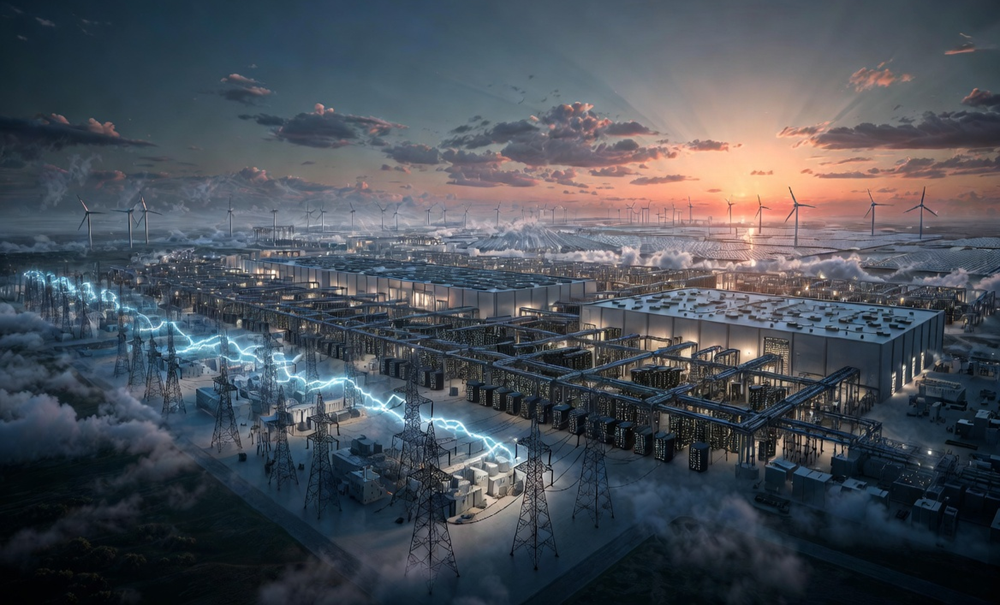
AI training, reasoning, and high-performance computing requirements require big calculations, but the more fundamental bottlenecks are not the GPU itself. What is really scarce are large-scale stable power, grid access, transmission and distribution infrastructure, industrial land, cooling systems and rapid delivery capabilities that support the operation of GPU clusters. And these are the assets that North American mining companies have been building over the past cattle market cycle. The large-scale mines they used to build in pursuit of Bitcoin Hashi rates are now re-pricing as the base of AI infrastructure. For a growing number of mining enterprises, the business model has also begun to expand from simply selling Hasharte to selling electricity and data centre capacity。
WHY, AI, THE CLIENT IS WILLING TO WORK WITH THE MINE
For hyperscaler and AI cloud service providers, the choice of mining cooperation is not only due to relatively cheap electricity. The core bottlenecks they currently face are that, even when GPU can be procured, it may not be possible to obtain sufficient power access and immediate delivery of data centre capacity within a reasonable time. The deployment cycle can be significantly shortened by mining companies with off-the-shelf grid access, industrial parks and mature power infrastructure, as compared with the start-up of the project from zero. Thus, the market does not simply purchase electricity per se, but rather “large power capacity that can be delivered quickly”。
More importantly, in the current North American data centre market, truly scarce resources have gradually shifted from GPU itself to Time-to-Power. For large AI clusters, waiting years for grid approval, transmission and distribution and park development often means missing model training cycles and commercial windows. By contrast, some mining companies already have scalable power access, mature parks and potential development capabilities of hundreds of MW class, which allows them to reduce the deployment cycle that would have taken several years to a shorter period. Against this background, AI clients purchase virtually not just electricity capacity, but a rapidly deployable and continuously expanding infrastructure delivery capacity。
Typical corporate case dismantling: contracts, financing and valuation swaps
Core Scientific (CORZ)
The long-standing cooperation between Core Scientific (CORZ) and CoreWeave was an early landmark case, with contract capacity expanded to approximately 590 MW key IT load, with the latest disclosure of the value of the base contract reaching approximately $8.7B+; cumulative revenue potential is expected to exceed $10B as subsequent capacity expands. The whole stock acquisition of CoreWeave, announced in July 2025, CORZ (valued at approximately $9 billion), was officially terminated on 30 October 2025 because shareholders had not approved the merger agreement. CORZ continues to advance HPC/AI operations as an independent company。
Hut 8 (HUT)
High Representative for Implementation. Long-term lease agreements with head AI clients, 15-year, 245 MW IT capacity lease agreements with base-term contract value $7B (with higher potential for renewal). The Beacon Point campus (Texas) has a new 15-year, 352 MW IT capacity lease with a base contract value of $9.8B. The total combined AI capacity of the two contracts is 597 MW and the total underlying contract value is approximately $16.8B. By supporting development through project financing, companies have increased long-term cash flow predictability through the introduction of a Triple-net leasing structure, and markets have begun to reassess corporate values more around long-term cash flows and infrastructure attributes。
Iris Energy / IREN
The company has signed an agreement with Microsoft for the deployment of approximately 200 MW IT loads at the Childress 750 MW campus, with a value of approximately $9.7B for five-year contracts (approximately $1.94B for corresponding years, based on company disclosures and market measurements). The relevant deployment arrangements facilitated the transformation of companies to AI cloud infrastructure providers and the market began to reassess corporate values more with long-term contract revenue and infrastructure cash flow logic. The company has also signed a hardware purchase agreement with Dell and uses renewable energy advantages to advance deployment。
TerraWulf (WULF)
TeraWulf (WULF) HPC / AI is gradually becoming one of the company's important growth engines. The company worked with Fluidstack, including the Abernathy campus 168 MW AI computation joint venture (25-year agreement with approximately $9.5B contract revenue) and completed project financing to support AI infrastructure development and accelerate the transition to the AI data centre platform。
Summary
THE CUMULATIVE PUBLIC DISCLOSURE OF AI-RELATED CONTRACTS, PROJECT REVENUE POTENTIAL AND MARKET MEASUREMENT HAVE REACHED TENS OF BILLIONS OF UNITED STATES DOLLARS IN VOLUME. SOME OF THE LEADING COMPANIES AI ' S RELATED INCOME CONTRIBUTIONS ARE BEGINNING TO INCREASE, AND THE FINANCING STRUCTURE IS BEGINNING TO INCORPORATE MORE PROJECT-LEVEL DEBT, LONG-TERM PAPER AND INFRASTRUCTURE FINANCE INSTRUMENTS, AND TO STRENGTHEN INFRASTRUCTURE ATTRIBUTE PRICING LOGIC。
MOST AI PROJECTS ARE EXPECTED TO BE PROGRESSIVELY DELIVERED AND ONLINE IN 2026-2027 AND ARE CURRENTLY (MID-2026) NOT FULLY DEPLOYED AND ACTUAL REVENUE CONTRIBUTIONS ARE STILL IN THE CLIMBING PHASE。
The true logic of financing flows: infrastructuralization pricing
The most noteworthy recent wave of financing is not the size of the contract itself, but the changing structure of financing。
IN THE PAST, MINING FINANCING WAS OFTEN HIGHLY DEPENDENT ON EQUITY FINANCING, EQUIPMENT MORTGAGES OR CYCLICAL FINANCING INSTRUMENTS AROUND BITCOIN PRICES, WITH FINANCING COSTS TIED TO THE DEPTH OF THE VOLATILITY OF THE ENCRYPTED MARKET. HOWEVER, AS SOME MINING COMPANIES BEGIN TO SIGN LONG-TERM AI HOSTING AGREEMENTS, ULTRA-LONG-TERM LEASE CONTRACTS AND DATA CENTRE PROJECTS WITH CLEAR CASH FLOW STRUCTURES, CAPITAL MARKETS ARE GRADUALLY ADOPTING ANOTHER SET OF LOGIC TO VIEW THESE ASSETS。
Some companies began to obtain project-level (project-level) debt financing, Non-recourse or credit enhancement structures, Triple-net long-term leases and Take-or-pay contractual arrangements. The central importance of these financing instruments is not just that of “lending more money”, but that income structures are beginning to become more long-term, predictable and increasingly close to the cash flow characteristics of traditional infrastructure assets。
This means that the market is trying to make a valuation switch for mining companies: from typical commodity-cycle companies, towards infrastructure assets and growing energy platforms. The real wager in the market is not whether these companies will be the next OpenAI, but whether they will be able to provide hundreds of MW-grade power on a sustainable basis with rapid delivery. Often, the key words in the contract are not models, but power capacity, IT load and interconvention。
The risks are equally real and huge
MARKET OPTIMISM DOES NOT MEAN THAT RISKS DISAPPEAR. ON THE CONTRARY, AI ITSELF COULD BE ONE OF THE MOST CAPITAL-INTENSIVE AND DIFFICULT TO IMPLEMENT IN THE HISTORY OF MINING COMPANIES。
FIRST IS CAPITAL EXPENDITURE PRESSURE. THE CONVERSION OF THE MINE INTO A HIGH DENSITY AI DATA CENTRE IS FAR FROM A SIMPLE REPLACEMENT EQUIPMENT, REQUIRING MORE SOPHISTICATED COOLING SYSTEMS, MORE DENSE POWER STRUCTURES AND LARGE PRE-CONSTRUCTION INPUTS. FOR SOME PROJECTS, DEPENDING ON THE PROJECT SPECIFICATIONS, THE COST OF BUILDING MW ALONE COULD RANGE FROM MILLIONS TO TENS OF MILLIONS OF UNITED STATES DOLLARS, MEANING THAT, EVEN IF FUNDED, THE PACE OF PROJECT DELIVERY WOULD HAVE A DIRECT IMPACT ON RETURN AND BALANCE SHEET PRESSURE。
The second is customer concentration of risk. A large number of contracts currently rely on a small number of hyperscaler, AI cloud service providers or large model companies. The value of long-term contracts may also be reassessed if deployment slows, client needs change or AI investments enter the adjustment cycle. In addition, mining companies have long been good at ASIC deployment, electricity cost management and mining operation, while the operation of hyperscale AI infrastructure requires new marketing capabilities, technological transport systems and more sophisticated partner ecology。
To a certain extent, the current high valuation given by the market is essentially a successful pricing in advance for implementation in the coming years. This valuation transition logic is also at risk of reversal if the speed of delivery, client demand or financing environment changes。
Deeper question: Are mines or mines
If the long-term sale of electricity capacity leads to a more stable cash flow than the simple sale of Hasharte, if the long-term lease model provides greater income predictability, and if infrastructure valuation continues to be higher than traditional mining valuations, then a more fundamental question begins to arise: will these companies be future Bitcoin mining
Over the past few years, market practices have seen mining as a typical cyclical asset, with the core variables being bitcoin prices, network difficulties and energy costs. However, as more companies begin to build business models around power capacity, data centre parks and long-term infrastructure contracts, their income structure, financing modalities and even investor narratives are changing。
REDUCING THE AMOUNT OF BITCOIN MIGHT NOT END THE GROWTH LOGIC OF THE GROUP, BUT RATHER FORCE MINING COMPANIES TO REDEFINE THEMSELVES. SOME OF THE LEADERS MAY EVENTUALLY EVOLVE INTO INFRASTRUCTURE PLATFORMS CENTRED ON THE OPERATION OF AI DATA CENTRES, SOME COMPANIES MAY CONTINUE TO MAINTAIN THE “MINING + AI” HYBRID MODEL, WHILE OTHERS THAT ARE SLOW TO TRANSITION WILL CONTINUE TO BE AFFECTED BY TRADITIONAL MINING CYCLES。
THIS TRANSITION MAY ULTIMATELY DETERMINE NOT ONLY THE FATE OF THE MINERS THEMSELVES, BUT MAY ALSO BE AN IMPORTANT EXAMPLE OF HOW AI-ERA ENERGY ASSETS HAVE BEEN RE-PRICING。
From this perspectiveThe real purchase of capital may never be the calculus itself, but rather the ability to deliver the power, land, network access and infrastructure on which it depends。
annex: this paper is based on publicly disclosed company announcements, regulatory documents, financial statements and market documentation. the value of the contract, the revenue potential and the development capacity referred to in the paper are mainly based on company disclosures, which in part amount to cumulative revenue potential (revenue potential) or management guidance over the period of the contract, and do not represent recognized revenue. this paper is for study and discussion only and does not constitute any investment proposal. the market situation is changing more rapidly, depending on the latest disclosure documents by companies。
