
AI IS CREATING A NEW "INFORMATION POOR"
THE NEW INFORMATION POOR ARE NOT PEOPLE WITHOUT AI, BUT PEOPLE WITH AI, WITH ANSWERS, WHO CANNOT TURN THEM INTO OPPORTUNITIES。

AI'S CRUELEST PLACE IS NOT WHERE IT DOESN'T GIVE THE POOR ANSWERS。
On the contrary, it gives everyone the answer。
It provides a framework for students ' dissertations, e-mail templates for employees, business plans for entrepreneurs, legal interpretations for ordinary people, investment advice, career planning. For the first time, the answer was so cheap, so sufficient, so real。
But the question is here: when the answer is available to everyone, what is really scarce is not the answer, but the ability to judge it。
THE NEW INFORMATION POOR ARE NOT PEOPLE WHO ARE BLOCKED FROM AI, BUT PEOPLE WHO HAVE BEEN GIVEN ANSWERS WITHOUT THE ABILITY TO JUDGE THE ANSWERS OR THE CONDITIONS TO BRING THEM TO REAL OPPORTUNITY。

I. AI INFORMATION DEFICIT OF THE ERA
The information poor of the Internet age are those excluded from the network. The solution seems clear: connectivity, universal equipment and literacy. The age of the search engine is a little complicated, and you need to learn to extract keywords, filter sources, judge credibility, and better understand English. But the threshold is visible and quantifiable。
AI AGE HAS POOR INFORMATION AND COMPLETELY DIFFERENT STRUCTURES。
The large language model is not a search engine. It generates conclusions for you directly. You don't have to go back to finding the answer -- it's going to be organized into fluid paragraphs, clear steps, self-confident tone, and it's coming to you. On the surface, the threshold has been significantly lowered. But there is a cold structure: when answers become cheap, so do mistakes; and the ability to discern whether "the answer is credible" is more scarce and valuable than ever。
EVERY PROLIFERATION OF UNIVERSAL TECHNOLOGIES IN HISTORY FOLLOWS THE SAME LOGIC: NEW TECHNOLOGIES REWARD THOSE WHO ALREADY HAVE COMPLEMENTARY CAPITAL. PRINTS BENEFIT LITERACY FIRST; COMPUTERS BENEFIT PEOPLE WHO KNOW OFFICE SOFTWARE AND PROGRAMMING FIRST; AND THE INTERNET BENEFITS PEOPLE WHO ARE HIGHLY COMPETENT IN ENGLISH AND SKILLED IN RETRIEVAL SKILLS FIRST. AI'S COMPLEMENTARY CAPITAL INCLUDES EDUCATIONAL BACKGROUND, EXPERTISE, CRITICAL THINKING, ORGANIZATIONAL MANDATE, ABILITY TO PAY, AND THE SAME TYPE OF JUDGEMENT THAT IS MOST DIFFICULT TO QUANTIFY。
New technologies rarely begin to reward those who need them most. It usually rewards those who make the most of it。
II. SEPARATED FIRST, THE WAY TO AI
The first crack of inequality was drawn before you opened it for application。
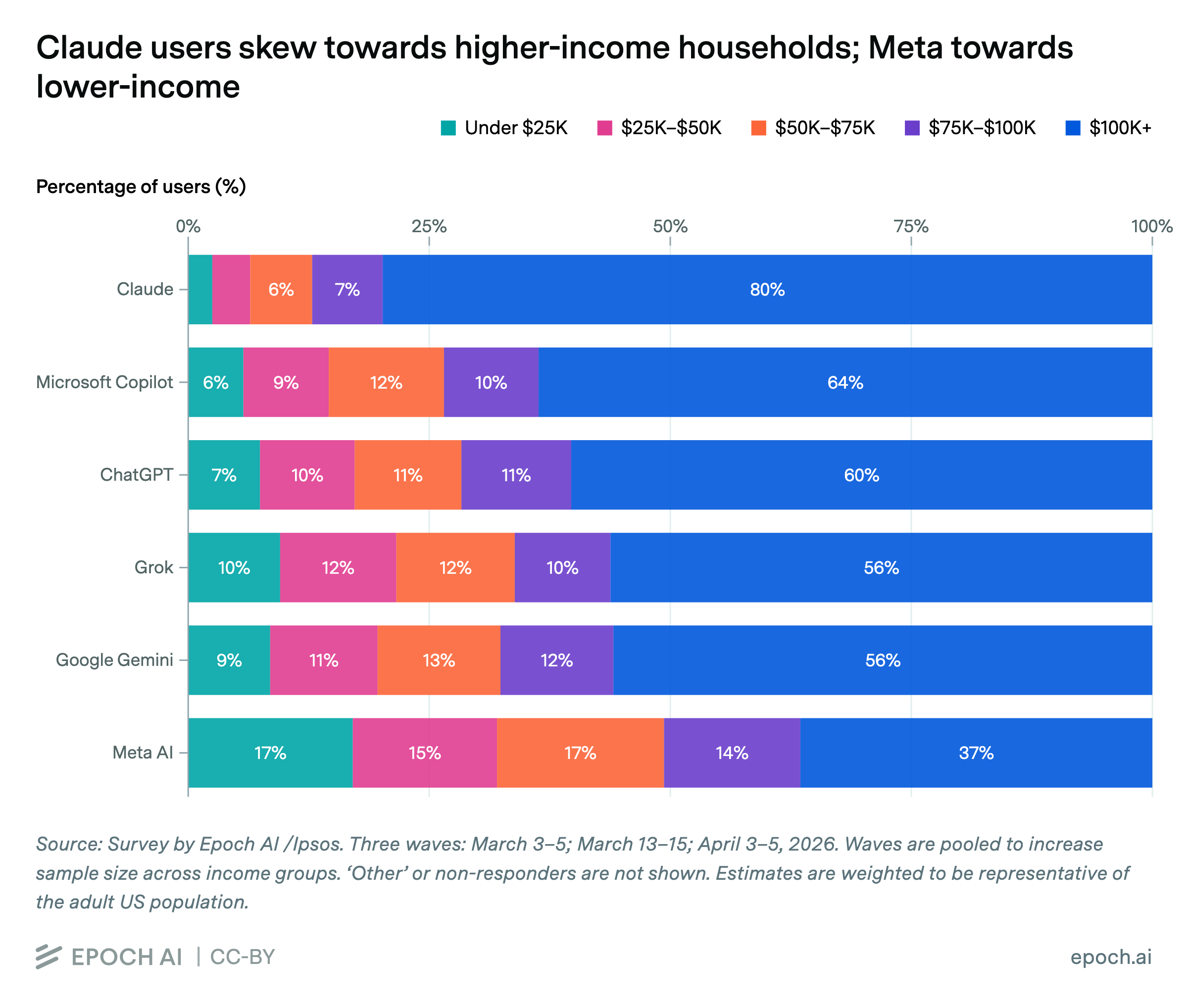
In April 2026, the AI research institute Epoch AI and the polling company Ipsos published a questionnaire for approximately 5,000 adults in the United States. The three rounds of questionnaires asked a seemingly ordinary question: What AI services have you used in the past week? But the answer is not a simple product preference, but a map of income, access and distribution。
Of Claude's weekly active users, about 80 per cent come from households with an annual income of over $100,000; of Meta AI users, only 37 per cent are. In turn, about 32 per cent of Meta AI users come from households with an annual income of less than $50,000, while the proportion of Claude users is only 7 per cent。
THESE FIGURES ARE NOT IMPORTANT BECAUSE THEY PROVE THAT “THE RICH USE ADVANCED AI, THE POOR USE FREE AI”. THAT'S THE SHALLOWEST READING. WHAT IS MORE WORTH ASKING IS: WHY DO DIFFERENT PEOPLE MEET DIFFERENT AI IN EVERYDAY LIFE
ONE PERSON HAD AI SET UP A DINNER FOR THE LEFTOVERS IN THE FRIDGE TO LIGHT UP THE BACKGROUND AND MAKE A TEXT MESSAGE MORE APPROPRIATE. ANOTHER HAD ASKED AI TO ORGANIZE CLIENT INTERVIEWS, COMPARE VENDOR OFFERS AND PICK OUT THE WEAK ASSUMPTIONS IN THE REPORT. BOTH ARE USING THE SAME TECHNOLOGY. HOWEVER, ONE CALLS STOP AT CONVENIENCE, THE OTHER GOES INTO A CYCLE OF INCOME, JOBS AND BARGAINING POWER。
The difference is not only on the user, but also on the portal. Claude's usage path requires proactive searches, comparison of products, understanding of differences in abilities, selection of fees, and embedding of tools into the workflow - every step is screening people. Meta AI's path is almost the opposite: it is embedded on social platforms, free of charge, low-intensity, and users are often passively encountered in brushing dynamices, sending messages or looking at photographs。
This is not a market for taste, but a market for distribution. Users appear to be selecting tools, their prices and entry points are also selecting users。
source: epoch.ai
THREE, THEN SEPARATE. USE AI
EVEN IF YOU FIND A GOOD AI TOOL, THE SECOND DIVERSION IS WAITING FOR YOU AT THE COMPANY。
IN ORDINARY OFFICES, THE ARRIVAL OF AI RARELY TAKES THE FORM OF “RETRENCHMENT NOTICES”. IT FIRST TAKES OVER THE MINUTES OF MEETINGS, DRAFT MAIL, TABULATION, CLIENT CLASSIFICATION AND FIRST DRAFT REPORTING. FOR MANAGERS, THESE AUTOMATIONS RELEASE TIME AND ALLOW THEM TO JUDGE; FOR NEWCOMERS AND GRASS-ROOTS WORKERS, THEY TAKE AWAY PRECISELY THE ENTRY POINT WHERE THEY PROVE THEMSELVES, PRACTICE JUDGEMENT AND ENTER HIGHER LEVELS OF WORK。
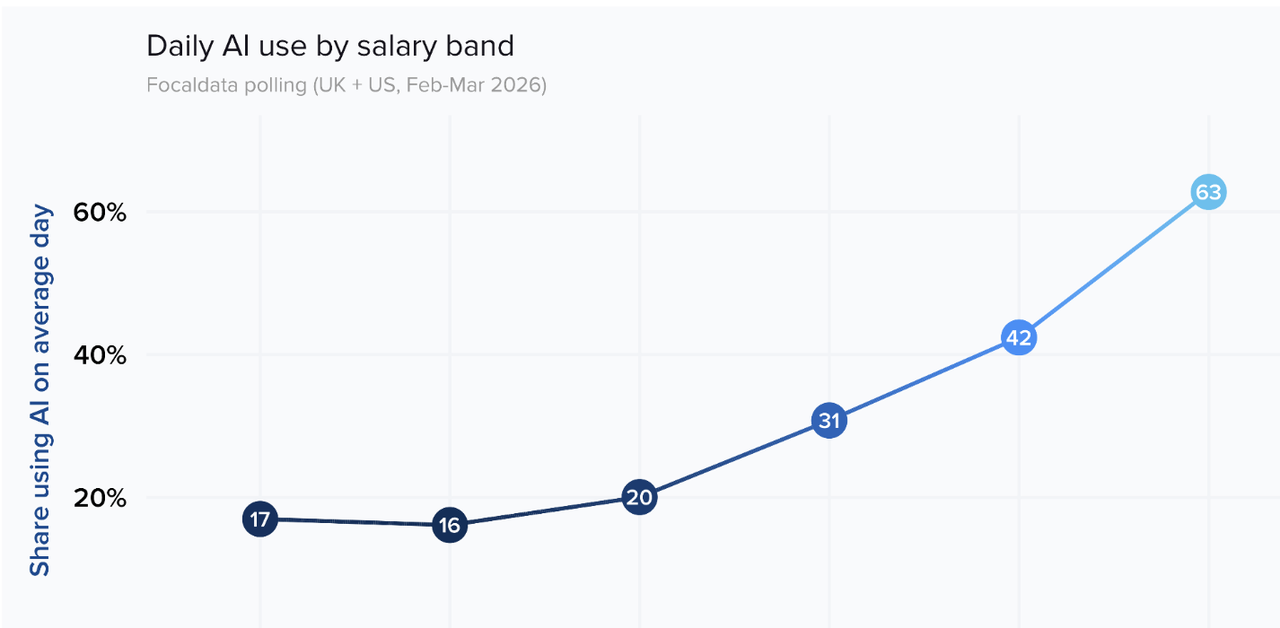
The data are colder than this scenario: the British-American Labour Force AI Tracking Survey, carried out jointly with research institutions (in February-March 2026, covering over 4,000 British-American respondents), shows that 63 per cent of workers in the highest pay brackets use AI on a regular working day, compared to only 17 per cent and 16 per cent of the lowest two tranches, respectively. This is not a cool slope, this is a cliff。
THE MORE CRITICAL FINDING LIES IN THE DRIVERS. THE REGRESSION ANALYSIS OF THIS WORKPLACE SURVEY REVEALED THAT THE IMPACT OF PAY ON AI USAGE ALMOST DISAPPEARED AFTER CONTROLLING OTHER VARIABLES - - FOUR FACTORS REALLY WORK: AGE, SENIORITY, INDUSTRY, AND TRAINING. THE MOST EFFECTIVE OF THESE IS TRAINING: A COMPANY THAT PROVIDES FORMAL AI TRAINING, WITH AN AVERAGE DAILY USAGE RATE OF AI EMPLOYEES 37 PERCENTAGE POINTS HIGHER THAN THAT OF UNTRAINED SIMILAR COMPANIES. EVEN WITH INFORMAL GUIDANCE, THERE IS AN INCREASE OF 24 PERCENTAGE POINTS。
HOWEVER, THE REALITY IS THAT, AS OF EARLY 2026, ONLY 14% OF EMPLOYEES INDICATED THAT THEY HAD RECEIVED FORMAL AI TRAINING FROM EMPLOYERS, AND TWO-THIRDS HAD NOT RECEIVED ANY FORM OF TRAINING AT ALL。
AI TRAINING IS NOT A TECHNICAL ISSUE, BUT A DISTRIBUTION ISSUE. WHOEVER IS SELECTED FOR TRAINING IS ALLOWED TO ENTER THE PRODUCTIVITY GROWTH TRACK; WHO IS NOT, THE TOOL IS JUST AN ICON ON THE SCREEN THAT IS NOT AUTHORIZED TO OPEN。
AI IS AN APPLICATION AT THE CONSUMPTION END AND THE ON-SITE END IS A PERMISSION. THE POWERS ARE NEVER EVENLY DISTRIBUTED。
Source: Focusdata
IV. FINAL SEPARATION IS THE ABILITY TO JUDGE AI
This is the most hidden diversion and the most fundamental。
IT IS ENVISAGED THAT A PROSPECTIVE GRADUATE HAS JUST ENTERED A CONSULTING FIRM. HE USED AI TO PRODUCE A FIRST DRAFT OF AN INDUSTRY ANALYSIS, STRUCTURED, WELL-DATAD AND CONFIDENT. HIS SUPERIOR, A MAN WHO HAD WORKED IN THE INDUSTRY FOR 10 YEARS, HAD LOOKED AT TWO OF THE ORIGINAL SOURCES CITED IN THE DATA AS METHODOLOGICALLY FLAWED AND THE CAUSALITY OF THE THIRD CONCLUSION WAS QUESTIONABLE. THE SUPERIOR WAS NOT BECAUSE HE WORKED HARDER THAN HE DID, BUT BECAUSE HE HAD THE BOTTOM SEAT — KNOWING WHERE IT COULD GO WRONG, KNOWING WHAT FLOW WAS REAL AND WHAT FLOW WAS EMPTY。
THIS IS THE TRUE MEANING OF THE ANTI-INTUITIVE DISCOVERY IN THE WORKPLACE SURVEY DATA: AI'S WORST USER AT WORK, NOT THE YOUNGEST EMPLOYEE, BUT SOMEONE WHO HAS BEEN WORKING AT HIS CURRENT POSITION FOR 2 TO 10 YEARS. AI THE RELATIONSHIP BETWEEN USAGE AND SENIORITY REMAINS SIGNIFICANT AFTER THE AGE OF CONTROL. IT'S NOT BECAUSE YOUNG PEOPLE DON'T WANT TO USE IT, IT'S BECAUSE THE VALUE OF AI IS HIGHLY DEPENDENT ON THE USER'S OWN ABILITY TO JUDGE。
EXPERIENCE IS THE MOST IMPORTANT COMPLEMENTARY CAPITAL OF AI, AND EXPERIENCE CANNOT BE SUBSCRIBED TO。
AI REDUCED THE COST OF "SOUNDING UNDERSTAND," BUT NOT THE COST OF "REAL UNDERSTAND." THERE IS EVEN A MORE DANGEROUS CONSEQUENCE: THE LESS USERS OF THE BOTTOM SEAT, THE EASIER IT IS TO COLLECT ALL OF AI'S OUTPUT; THE MORE IT IS, THE HARDER IT IS TO JUDGE. WHEN THE AGENT JUDGES FOR YOU, YOU CONSUME INTELLIGENCE, NOT ACCUMULATE IT。
Nobel Laureate in Economics, Professor Daron Acemoglu, is unkind in this: the use of AI tools requires a degree of education, abstract thinking, quantification and familiarity with technology. "Ai to increase inequality, it's almost certain," he said。
THE NEW INFORMATION POOR ARE SHAPED HERE: THEY ARE NOT PEOPLE WITHOUT AI; THEY HAVE AI, THEY HAVE ACCESS, THEY HAVE ANSWERS, THEY LACK TRAINING TO JUDGE THEM; THEY HAVE TOOLS, THEY HAVE SCENES, THEY DO NOT HAVE THE POWER TO TURN THEIR OUTPUT INTO AN OPPORTUNITY; THEY CONSUME INTELLIGENCE EVERY DAY, BUT THEY HAVE NEVER ACCUMULATED INTELLIGENCE。
V. BORDER OF THE EQUALITY EFFECTS
HOWEVER, AI ' S RELATIONSHIP WITH INEQUALITY IS NOT LIMITED TO WIDENING THE GAP。
SEVERAL EXPERIMENTAL STUDIES HAVE FOUND THAT AI TENDS TO IMPROVE EVEN MORE FOR LOW-SKILLED PEOPLE UNDER MANAGEABLE CONDITIONS - FOR CALL CENTRE STAFF, PRIMARY AUTHORS, AND INTRODUCTORY COUNSELLORS. THIS IS EASY TO UNDERSTAND: THE MARGINAL GAIN THAT THE TOP EXPERT HAS RECEIVED FROM AI IS LIMITED; A PERSON WHO HAS NOT BEEN ABLE TO AFFORD PROFESSIONAL SERVICES HAS FOR THE FIRST TIME READ A CONTRACT WITH AI, WHICH IS ITSELF A QUALITATIVE LEAP。
But here's a key difference: experimental studies measure "upgrading after use", while realistic data measure "who is actually using", "who is allowed to use" and "who can turn results into opportunities after using." Neither set of data is lying, and they measure something completely different。
A technology can narrow the gap in laboratories while widening it in the real world - If the adoption itself is unequal, if the scene itself is unequal, if judgement itself is unequal。
AI HAS AN AFFIRMATIVE TECHNICAL IDENTITY, BUT OPERATES WITHIN AN UNEQUAL SOCIAL STRUCTURE. THESE TWO POINTS ARE BOTH TRUE AND THE REAL SHAPE OF THE PROBLEM。
VI. Technology will spread and dividends will not reach simultaneously
Each generation tends to believe that universal technology in its own time will break the old order。
After printing, literates benefited for centuries. When the computer became popular, it magnified the ability of those already using office software and writing codes. The early dividends of the Internet flow to people who know English, can retrieve, have time and motivation to arbitrate. In every technology wave, the voices of "this different" are loud, and structural diversions often take decades to become visible。
THE DIVERSION OF AI MAY BE FASTER AND THE FORK MAY BE DEEPER. BECAUSE IT AFFECTS NOT A PARTICULAR TYPE OF TASK, BUT ALMOST ALL WORK THAT RELIES ON JUDGEMENT AND LANGUAGE. THIS IS PRECISELY THE TYPE OF CAPACITY THAT IS MOST DIFFICULT TO STANDARDIZE AND TO REDISTRIBUTE。
It was felt that the gap would eventually narrow. According to the economic historian, Carl Benedikt Frey, a professor at the Oxford Internet Institute, he is based on history: the inequalities associated with computer penetration, which gradually faded after decades as the threshold for use fell. This analogy is not unreasonable。
The problem is that even accepting this optimistic historical analogy, Frey himself acknowledged the key qualification: "It depends on how long it takes the gap to close. Ten or twenty years, that's even more worrying."
Ten or twenty years are not an easy-to-wait timescale — especially for those who need to find jobs, talk about salaries and gain experience during this period。
Concluding remarks
This is a strange moment in history: for the first time we have a technology that makes everyone feel that they are becoming smarter。
This feeling is often the end。
The problem is that, in an era when judgement is truly decisive for winning and losing, it may be the most expensive mistake to end feelings。
