
Toàn văn podcast mới nhất của Jen-Hsun Huang: Tương lai của Nvidia, sự phát triển của trí tuệ nhân tạo và Đặc vụ, sự bùng nổ nhu cầu lý luận và cuộc khủng hoảng quan hệ công chúng của trí tuệ nhân tạo
Sự cạnh tranh trong tương lai sẽ không chỉ phụ thuộc vào ai có mô hình lớn hơn và sức mạnh tính toán mạnh hơn mà còn phụ thuộc vào ai hiểu rõ ngành hơn, ai có thể nhúng AI sâu hơn vào các quy trình thực và ai có thể tổ chức các khả năng này thành một hệ thống có thể chạy được và có thể mở rộng.
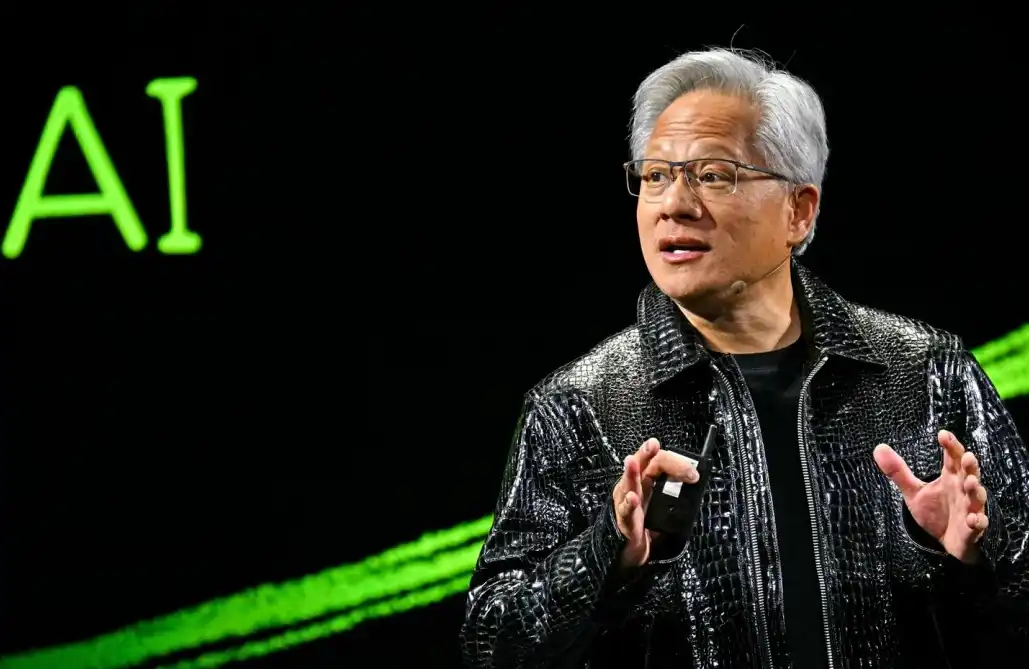
Tiêu đề video: Jensen Huang: Tương lai của Nvidia, AI vật lý, Sự trỗi dậy của đặc vụ, Sự bùng nổ suy luận, Khủng hoảng PR AI
Tác giả video: Podcast toàn diện
Biên soạn bởi: Peggy, BlockBeats
Lưu ý của người biên tập: Khi câu chuyện về AI tiếp tục nóng lên, trọng tâm của cuộc thảo luận thị trường đang chuyển từ "mức độ mạnh của mô hình" sang "hệ thống được triển khai như thế nào". Trong hai năm qua, ngành này đã trải qua những đột phá về khả năng mô hình lớn, sự cạnh tranh trong việc đào tạo sức mạnh tính toán và mở rộng các ứng dụng tổng hợp. Nhưng khi các giai đoạn này dần dần trở thành sự đồng thuận, các câu hỏi mới cũng xuất hiện: khi AI không còn chỉ trả lời các câu hỏi mà bắt đầu thực hiện các nhiệm vụ, nhúng vào các quy trình doanh nghiệp và bước vào thế giới vật chất, thì điều kiện cơ bản nào hỗ trợ sự phát triển liên tục của nó?
Cuộc trò chuyện trong bài viết này được trích từ podcast công nghệ All-In Podcast nổi tiếng. Là một trong những podcast dành cho nhà đầu tư có ảnh hưởng nhất ở Thung lũng Silicon, chương trình này được đồng tổ chức bởi bốn nhà đầu tư đã hoạt động ở tuyến đầu trong thời gian dài và nổi tiếng với các cuộc thảo luận chuyên sâu về công nghệ, kinh doanh và xu hướng vĩ mô.
Bốn người dẫn chương trình là:
·Jason Calacanis, một doanh nhân Internet thời kỳ đầu và nhà đầu tư thiên thần, nổi tiếng với việc đầu tư vào các công ty như Uber và Robinhood;
·Chamath Palihapitiya, Người sáng lập Social Capital, cựu giám đốc điều hành Facebook, người đã đầu tư vào nhiều công ty công nghệ như Slack và Box;
·David Sacks, đối tác của Craft Ventures, một trong những thành viên của "PayPal Mafia", đã thành lập Yammer và bán nó cho Microsoft với giá khoảng 1,2 tỷ USD, đồng thời cũng là nhà đầu tư ban đầu vào Airbnb và Uber;
·David Friedberg, Người sáng lập Ban Sản xuất, tập trung đầu tư vào nông nghiệp, khí hậu và khoa học đời sống, đồng thời thành lập The Climate Corporation (sau này được Monsanto mua lại).
Khách mời trong số này là Jensen Huang, đồng sáng lập và Giám đốc điều hành của NVIDIA, người được coi là một trong những người thúc đẩy quan trọng nhất trong làn sóng cơ sở hạ tầng AI hiện nay.
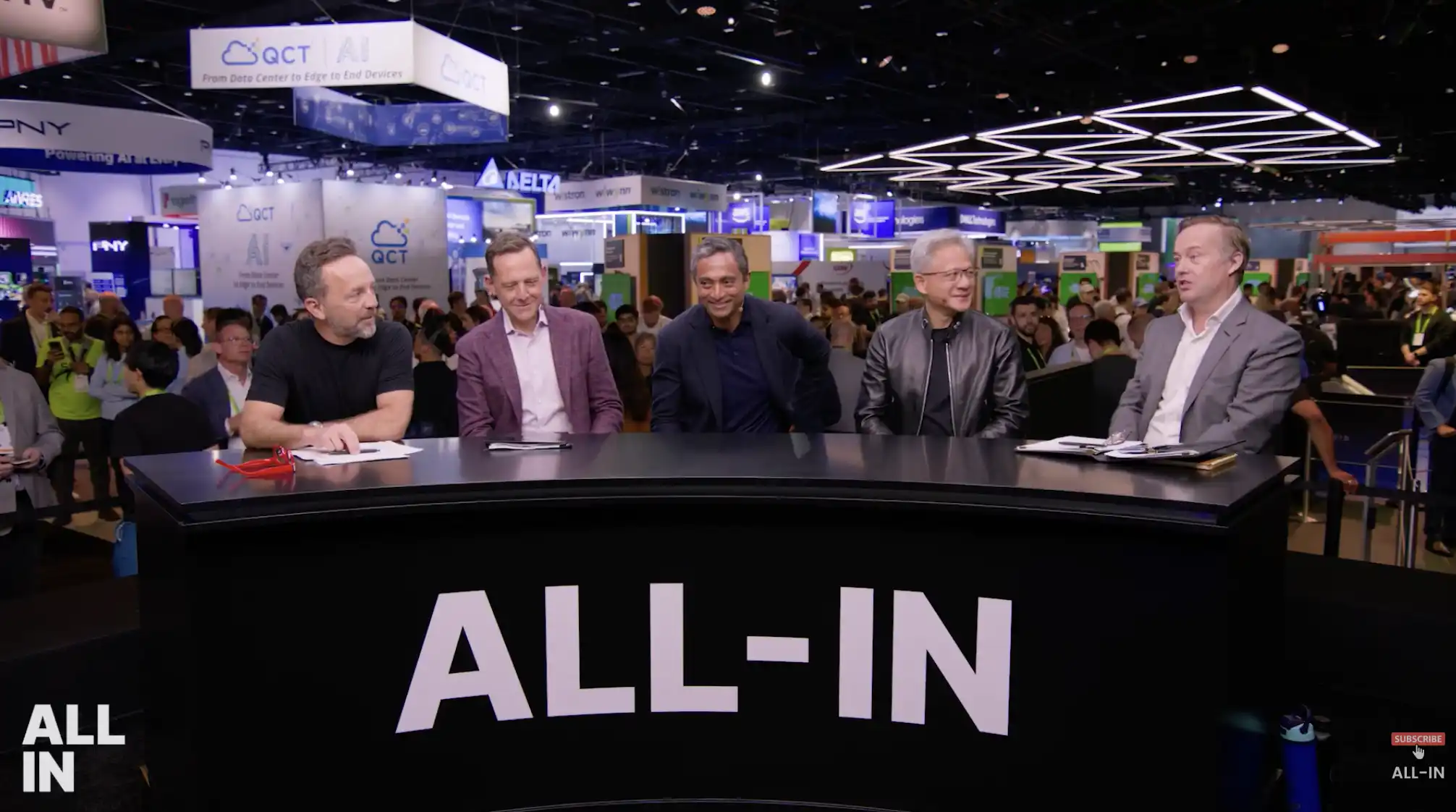
Từ trái sang phải là David Friedberg, Chamath Palihapitiya, David Sacks, Jensen Huang và Jason Calacanis
Toàn bộ cuộc phỏng vấn có thể được tóm tắt đại khái thành ba cấp độ.
Đầu tiên, cơ sở hạ tầng AI đang thay đổi. Trước đây, hiểu biết của thị trường về AI chủ yếu dựa vào GPU mạnh hơn và nhiều trung tâm dữ liệu hơn. Nhưng điều Huang Renxun muốn nhấn mạnh là sự cạnh tranh trong tương lai không còn chỉ là sự cạnh tranh của một con chip đơn lẻ mà là sự cạnh tranh của toàn bộ hệ thống. Khi nhu cầu suy luận tăng lên, các loại mô hình tăng lên và các tác nhân bắt đầu xử lý các nhiệm vụ phức tạp hơn, điện toán AI đang chuyển từ một mô hình tương đối đơn lẻ trước đây sang một hệ thống cộng tác phức tạp hơn và phân chia nhiều hơn. Do đó, NVIDIA đang cố gắng đẩy mạnh hơn nữa vai trò của mình từ một công ty chip trở thành nhà xây dựng các “nhà máy AI”.
Thứ hai, AI đang chuyển từ “tạo nội dung” sang “hoàn thành nhiệm vụ”. Đây là manh mối quan trọng nhất trong cuộc phỏng vấn này. ChatGPT lần đầu tiên cho phép công chúng cảm nhận được sức mạnh của AI một cách trực quan, nhưng theo quan điểm của Huang Renxun, thay đổi thực sự lớn hơn là AI bắt đầu tham gia vào quy trình làm việc dưới dạng một tác nhân: nó không chỉ trả lời các câu hỏi mà còn có thể gọi các công cụ, phân tách nhiệm vụ, thực hiện hợp tác thực thi và cuối cùng hoàn thành công việc. Vì điều này, những gì người dùng sẵn sàng trả cho AI sẽ dần chuyển từ “nhận được câu trả lời” sang “nhận được kết quả”. Điều này có nghĩa là yêu cầu lý luận lớn hơn và độ phức tạp của hệ thống cao hơn. Điều đó cũng có nghĩa là cách thức phát triển phần mềm, quản lý tổ chức và hoạt động tri thức có thể được viết lại.
Cuối cùng, AI đang mở rộng từ thế giới kỹ thuật số sang thế giới thực. Trong cuộc phỏng vấn, cho dù chúng ta nói về xe tự hành, robot, chăm sóc y tế, sinh học kỹ thuật số hay AI vật lý mà Huang Renxun đề cập, về cơ bản, chúng đều hướng đến cùng một xu hướng: giá trị của AI không chỉ được phản ánh qua màn hình mà còn sẽ ngày càng được phản ánh trong các nhà máy, bệnh viện, ô tô, thiết bị đầu cuối và cuộc sống hàng ngày. Nhưng điều này cũng có nghĩa là những gì AI sẽ phải đối mặt tiếp theo sẽ không còn chỉ là những thách thức kỹ thuật mà còn là những hạn chế phức tạp hơn trong thế giới thực như chuỗi cung ứng, chính sách, giám sát, khả năng sản xuất và địa chính trị. Nói cách khác, vòng mở rộng tiếp theo của AI sẽ là một quá trình công nghiệp hóa thực sự.
Từ góc độ này, điều đáng chú ý nhất trong cuộc trò chuyện này không phải là một sản phẩm cụ thể hay một con số lạc quan, mà là nhận định mà Huang Renxun nhiều lần truyền đạt: AI đang chuyển từ "kỷ nguyên mô hình" sang "kỷ nguyên hệ thống". Sự cạnh tranh trong tương lai không chỉ là mô hình của ai lớn hơn và có sức mạnh tính toán cao hơn mà còn là ai hiểu rõ ngành hơn, ai có thể nhúng AI sâu hơn vào các quy trình thực và ai có thể tổ chức các khả năng này thành một tập hợp các hệ thống có thể chạy được và có thể mở rộng.
Điều này cũng khiến đối tượng của bài viết này vượt xa chính NVIDIA. Câu hỏi mà nó thực sự cố gắng trả lời là: khi AI dần dần trở thành cơ sở hạ tầng, vòng tái cơ cấu công nghiệp tiếp theo sẽ diễn ra như thế nào và giá trị mới sẽ được hình thành ở đâu?
Sau đây là nội dung gốc (nội dung gốc đã được chỉnh sửa để dễ đọc và dễ hiểu hơn):
TL;DR
·Cơ sở hạ tầng AI đang chuyển từ "GPU đơn" sang kiến trúc tách rời. Các tác vụ điện toán khác nhau sẽ được hoàn thành một cách cộng tác bởi GPU, CPU, chip mạng và chip suy luận như Groq.
·NVIDIA đang chuyển đổi từ một công ty GPU thành một "công ty nhà máy AI" cung cấp các hệ thống hoàn chỉnh. Thứ được bán là toàn bộ cơ sở hạ tầng chứ không phải một con chip nào.
·Chìa khóa để đo lường chi phí của AI không phải là chi phí của trung tâm dữ liệu mà là chi phí mã thông báo và hiệu quả thông lượng. Một hệ thống đắt tiền hơn có thể thực sự rẻ hơn.
·AI đang chuyển từ các mô hình sáng tạo sang kỷ nguyên Tác nhân. Người dùng thực sự sẵn sàng trả tiền để hoàn thành công việc chứ không chỉ để nhận được câu trả lời.
·Nhu cầu máy tính đang bùng nổ. Từ thế hệ đến lý luận đến tác nhân, nó có thể đã mở rộng hơn 10.000 lần trong một khoảng thời gian ngắn và nó vẫn đang tăng tốc.
·Phát triển phần mềm sẽ thay đổi trong tương lai. Các kỹ sư không còn chỉ viết mã mà còn xác định vấn đề, thiết kế kiến trúc và cộng tác với các tác nhân.
·Về lâu dài, cơ hội lớn nhất nằm ở sự chuyên môn hóa sâu sắc trong các lĩnh vực ngành dọc, thay vì ở bản thân mô hình chung. Ai hiểu rõ ngành hơn sẽ có con hào tốt hơn.
Nguyên văn cuộc phỏng vấn
Jason Calacanis (nhà đầu tư thiên thần nổi tiếng | Người dẫn chương trình All-In Podcast | Đầu tư sớm vào Uber):
Tuần này là một tập đặc biệt. Chúng tôi nhường chỗ cho chương trình thường xuyên hàng tuần, một phương pháp điều trị mà chúng tôi thường chỉ dành cho ba người: Tổng thống Trump, Jesus và Jensen Huang (người sáng lập và Giám đốc điều hành của NVIDIA). Về việc sắp xếp ba điều này như thế nào, bạn tự quyết định. Gần đây bạn đã đạt được rất nhiều động lực và GTC này cũng rất thành công.
Jensen Huang (Giám đốc điều hành Nvidia):
Toàn bộ ngành đều ở đây. Tất cả các công ty công nghệ, tất cả các công ty AI đều có mặt khá nhiều ở đây.
Jason Calacanis:
Thật không thể tin được, thực sự phi thường. Một trong những phiên bản phát hành lớn nhất trong năm qua là Groq. Khi mua lại Groq, bạn có nhận ra Chamath sẽ “không thể chịu đựng được” đến mức nào không?
Lưu ý: Groq không phải là Grok. Công ty đầu tiên là công ty sản xuất chip suy luận AI và đám mây suy luận, còn công ty sau là robot trò chuyện của xAI. Vào cuối năm 2025, Groq đã đạt được thỏa thuận cấp phép công nghệ suy luận không độc quyền với NVIDIA. Số tiền giao dịch chính thức không được tiết lộ; tuy nhiên, đã có những báo cáo và suy đoán trị giá khoảng 17 tỷ USD đến 20 tỷ USD. Đến GTC 2026, Huang Renxun đã trình diễn thêm một hệ thống suy luận dựa trên công nghệ Groq được tích hợp vào nền tảng NVIDIA.
Chamath được đề cập ở đây đề cập đến Chamath Palihapitiya (Người sáng lập Vốn xã hội | Cựu Giám đốc điều hành Facebook | Người dẫn chương trình toàn diện). Anh ấy là một trong bốn người dẫn chương trình All-In và là nhà đầu tư ban đầu cũng như thành viên hội đồng quản trị của Groq. Vì vậy, khi thương vụ lớn của NVIDIA với Groq lộ diện, đây được coi là một vụ đặt cược khác vào một dự án quan trọng của Chamath.
Huang Renxun:
Tôi có một linh cảm mơ hồ.
Jason Calacanis:
Chúng tôi phải đối phó với anh ấy hàng tuần.
Huang Renxun:
Tôi biết. Bạn vẫn phải đồng hành cùng anh ấy trong suốt thời gian sinh nở kéo dài sáu tuần.
Jason Calacanis:
Đúng vậy.
Từ công ty GPU đến công ty “nhà máy AI”
Huang Renxun:
Trên thực tế, nhiều chiến lược của chúng tôi sẽ được công bố công khai tại GTC trước vài năm. Hai năm rưỡi trước, tôi đã giới thiệu hệ điều hành của nhà máy AI, được gọi là Dynamo.
Như các bạn đã biết, dynamo ban đầu là một thiết bị do Siemens phát minh. Nó có thể chuyển đổi năng lượng của nước thành năng lượng điện và thúc đẩy hệ thống nhà máy trong cuộc cách mạng công nghiệp vừa qua. Vì vậy tôi nghĩ cái tên này rất phù hợp làm tên của “hệ điều hành nhà máy” trong cuộc cách mạng công nghiệp tiếp theo. Ở Dynamo, một trong những công nghệ cốt lõi là suy luận tách rời.
Jason Calacanis:
Jensen, tôi biết bạn rất kỹ thuật. Thôi nào, bạn xác định nó. Tôi không muốn đánh cắp sự chú ý của bạn.
Huang Renxun:
Cảm ơn bạn. Cái gọi là lý luận tách rời có nghĩa là toàn bộ quy trình xử lý lý luận cực kỳ phức tạp và thậm chí có thể là loại vấn đề điện toán phức tạp nhất hiện nay.
Nó có quy mô đáng kinh ngạc và chứa một số lượng lớn các phép tính toán học ở nhiều dạng và tỷ lệ khác nhau. Ý tưởng là phân chia toàn bộ luồng xử lý để một phần chạy trên một loại GPU và phần còn lại chạy trên một loại GPU khác. Hơn nữa, điều này cũng khiến chúng tôi nhận ra rằng có lẽ bản thân điện toán tách rời là một hướng đi hợp lý: chúng ta hoàn toàn có thể để các loại và thuộc tính khác nhau của tài nguyên máy tính hoạt động cùng nhau.
Ý tưởng tương tự sau đó đã dẫn chúng tôi đến Mellanox. Bạn thấy ngày nay, điện toán của NVIDIA từ lâu đã được phân phối trên GPU, CPU, bộ chuyển mạch, bộ chuyển mạch mở rộng quy mô, bộ chuyển mạch mở rộng quy mô và bộ xử lý mạng. Bây giờ, chúng ta phải thêm Groq vào hỗn hợp.
Mục tiêu của chúng tôi là đặt đúng khối lượng công việc vào đúng con chip. Nói cách khác, chúng tôi đã phát triển từ một công ty GPU thành một công ty sản xuất AI.
David Sacks (Đối tác tại Craft Ventures | Cựu COO PayPal | Người điều hành toàn diện):
Đối với tôi, đây có lẽ là nguồn cảm hứng quan trọng nhất. Những gì bạn đang thấy bây giờ là sự "tách rời" cơ bản. Trước đây chỉ có một lựa chọn duy nhất: GPU, nhưng hiện nay ngày càng có nhiều dạng điện toán khác nhau bắt đầu xuất hiện và các tùy chọn này sẽ cùng tồn tại trong tương lai.
Bạn đã đề cập điều gì đó trên sân khấu mà tôi nghĩ mọi người thực hiện suy luận có giá trị cao nên lắng nghe cẩn thận: bạn nói rằng khoảng 25% không gian trong trung tâm dữ liệu nên được phân bổ cho LPU của Groq.
Lưu ý: LPU là tên viết tắt của Đơn vị xử lý ngôn ngữ. Đây là danh mục chip được Groq đề xuất. Định vị cốt lõi không phải là đào tạo mà là suy luận
Huang Renxun:
Đúng vậy, trong trung tâm dữ liệu, Groq có thể chiếm khoảng 25% hệ thống Vera Rubin.
Lưu ý: Vera Rubin là kiến trúc nền tảng AI thế hệ tiếp theo của NVIDIA. Nó không phải là một con chip đơn lẻ mà là nền tảng cơ sở hạ tầng cấp hệ thống dành cho các nhà máy AI.
David Sacks:
Bạn có thể cho chúng tôi biết hiện nay ngành này nhìn nhận hướng đi này như thế nào không? Về cơ bản, bạn đang xây dựng thế hệ tiếp theo của kiến trúc tách rời: việc điền trước và giải mã được tách riêng và quá trình suy luận được tách ra. Bạn nghĩ mọi người sẽ phản ứng thế nào?
Huang Renxun:
Hãy lùi lại một bước và xem xét nó. Chúng tôi đã thêm khả năng này vào hệ thống vào thời điểm đó vì toàn bộ ngành đã chuyển từ xử lý mô hình ngôn ngữ lớn sang Xử lý tác nhân, tức là xử lý thông minh.
Khi bạn chạy một tác nhân, nó sẽ truy cập vào bộ nhớ làm việc, bộ nhớ dài hạn và các công cụ gọi, điều này gây áp lực lớn cho việc lưu trữ. Bạn cũng sẽ thấy các đại lý cộng tác với các đại lý. Một số đại lý sử dụng mô hình rất lớn, một số sử dụng mô hình nhỏ; một số là mô hình khuếch tán, và một số là mô hình tự hồi quy. Nói cách khác, trong trung tâm dữ liệu này sẽ có rất nhiều loại mô hình hoàn toàn khác nhau tồn tại cùng một lúc. Chúng tôi đã xây dựng Vera Rubin để xử lý tải cực kỳ đa dạng này.
Vì vậy, trước đây chúng tôi là công ty "một giá đỡ" và bây giờ chúng tôi có bốn giá đỡ mới. Nói cách khác, TAM của NVIDIA, hay thị trường có thể sử dụng được, đột nhiên mở rộng, cao hơn khoảng 33% đến 50% so với trước đây.
Trong số 33% đến 50% những bổ sung mới, phần lớn sẽ là bộ xử lý lưu trữ, đó là BlueField; một phần, cá nhân tôi rất hy vọng rằng đó sẽ là một phần lớn, sẽ là bộ xử lý Groq; phần khác sẽ là CPU; tất nhiên cũng sẽ có nhiều bộ xử lý mạng. Tất cả những điều này, kết hợp lại, cuối cùng đang vận hành “máy tính mới” của cuộc cách mạng AI: các đặc vụ. Nó là hệ điều hành của nền công nghiệp hiện đại.
Chamath Palihapitiya (Người sáng lập Social Capital | Cựu Giám đốc điều hành Facebook | Máy chủ toàn diện):
Còn các ứng dụng nhúng thì sao? Ví dụ, nếu con gấu bông ở nhà con gái tôi muốn nói chuyện với con bé thì nó sẽ chứa đựng điều gì? Đây có phải là ASIC tùy chỉnh không? Hay sẽ có TAM rộng hơn cho các kịch bản biên và kịch bản nhúng trong tương lai, với các công cụ khác nhau cho các kịch bản khác nhau?
Lưu ý: ASIC đề cập đến Mạch tích hợp dành riêng cho ứng dụng (mạch tích hợp dành riêng cho ứng dụng), TAM đề cập đến Tổng thị trường có thể định địa chỉ (tổng thị trường có thể phục vụ)
Huang Renxun:
Chúng tôi tin rằng thực tế có ba máy tính gặp vấn đề này.
Đầu tiên, ở quy mô lớn nhất, là máy tính dùng để đào tạo các mô hình AI, phát triển AI và tạo ra AI.
Cái thứ hai là máy tính dùng để đánh giá AI. Ví dụ, nếu bạn nhìn xung quanh mình, ở khắp mọi nơi đều có robot và ô tô. Trước tiên bạn phải đánh giá chúng trong môi trường ảo đại diện cho thế giới vật chất. Nói cách khác, bản thân phần mềm phải tuân theo các định luật vật lý. Chúng tôi gọi hệ thống này là Omniverse.
Loại thứ ba là máy tính được triển khai ở biên, là máy tính robot. Đó có thể là một chiếc ô tô tự lái, một robot hay thậm chí là một chú gấu bông nhỏ.
Đối với các thiết bị như gấu bông, một trong những hướng đi rất quan trọng là điều chúng tôi đang làm: biến các trạm gốc viễn thông thành một phần của cơ sở hạ tầng AI. Bằng cách này, toàn bộ ngành viễn thông trị giá hai nghìn tỷ đô la sẽ dần trở thành một phần mở rộng của cơ sở hạ tầng AI trong tương lai. Vì vậy, radio sẽ trở thành thiết bị biên, các nhà máy sẽ trở thành thiết bị biên và nhà kho cũng sẽ như vậy.
Tóm lại, 3 loại máy tính cơ bản này đều không thể thiếu được.
David Friedberg (Người sáng lập Ban sản xuất | Người dẫn chương trình All-In Podcast):
Jensen, năm ngoái tôi có cảm giác rằng bạn đã xem nó sớm hơn cả thế giới. Lúc đó bạn đã nói rằng nhu cầu suy luận sẽ không tăng theo hệ số 1.000.
Huang Renxun:
Tôi đã tự lừa mình à?
David Friedberg:
Nhưng tăng gấp triệu lần? Một tỷ lần? Phải?
Tôi nghĩ vào thời điểm đó nhiều người cho rằng điều này quá cường điệu, bởi lúc đó cả thế giới vẫn đang tập trung vào việc mở rộng đào tạo. Nhưng bây giờ bạn thấy đấy, lý luận đã thực sự bùng nổ, và nó bắt đầu trở nên "lý luận bị giới hạn". Bây giờ bạn đã phát hành một "nhà máy suy luận" khác với thông lượng cao gấp 10 lần so với nhà máy thế hệ tiếp theo.
Nhưng nếu nhìn vào các cuộc thảo luận bên ngoài, nhiều người sẽ nói: Nhà máy suy luận của bạn có giá 40 tỷ đến 50 tỷ đô la Mỹ, còn những lựa chọn thay thế đó, chẳng hạn như ASIC tùy chỉnh, AMD, v.v., chỉ có giá 25 tỷ đến 30 tỷ đô la Mỹ, vì vậy bạn sẽ mất thị phần.
Vậy thì bạn cũng nên nói thẳng với chúng tôi: Chính xác thì bạn đã nhìn thấy gì? Bạn nghĩ gì về thị phần? Việc những khách hàng này phải trả gần gấp đôi phí bảo hiểm có đáng không?
Tại sao một hệ thống đắt tiền hơn lại có thể tạo ra những token rẻ hơn?
Huang Renxun:
Điểm quan trọng nhất và cốt lõi là: không đánh đồng giá của nhà máy với giá của mã thông báo, cũng không đánh đồng nó với giá của mã thông báo.
Điều đó rất có thể xảy ra và tôi có thể chứng minh rằng nhà máy trị giá 50 tỷ USD đó có thể sản xuất ra mã thông báo với chi phí thấp nhất. Lý do là chúng tôi có thể tạo ra những mã thông báo này cực kỳ hiệu quả, hiệu quả hơn tới 10 lần.
Bạn thấy đấy, phần lớn sự khác biệt giữa 50 tỷ USD và 20 tỷ USD thực chất chỉ là đất đai, điện và vỏ nhà máy. Ngoài ra, bạn phải mua bộ lưu trữ, mạng, CPU, máy chủ và hệ thống làm mát. Vì vậy, dù bản thân GPU có giá gốc hay giảm một nửa cũng không trực tiếp giảm tổng chi phí từ 50 tỷ xuống còn 30 tỷ. Bạn có thể chọn bất kỳ số nào bạn thích. Thực tế hơn, nó có thể giảm từ 50 tỷ xuống còn 40 tỷ.
Nếu một trung tâm dữ liệu trị giá 50 tỷ USD có thông lượng cao hơn 10 lần thì sự chênh lệch về giá thực tế không là gì.
Jason Calacanis: Hiểu rồi.
Huang Renxun:
Đây là lý do tại sao tôi luôn nói: Ngay cả đối với nhiều loại chip, nếu bạn không thể theo kịp giới hạn công nghệ và tốc độ phát triển của chúng ta, thì ngay cả khi chip được tặng miễn phí, chúng vẫn không đủ rẻ.
David Sacks:
Tôi muốn hỏi một câu hỏi mang tính chiến lược rộng hơn. Bây giờ bạn đang điều hành công ty có giá trị nhất trên thế giới. Doanh thu có thể lên tới 350 tỷ USD vào năm tới với dòng tiền tự do là 200 tỷ USD, lãi gộp ở mức điên cuồng.
Bạn đưa ra quyết định như thế nào? Làm thế nào để bạn có được thông tin? Bây giờ mọi người đều biết đến hệ thống email nổi tiếng của bạn, nhưng làm thế nào để bạn thực sự phát triển trực giác của mình, định hình thị trường và quyết định nơi cần tập trung, nơi cần thu hẹp và nơi để thâm nhập vào các lĩnh vực mới? Thông tin này đến với bạn bằng cách nào? Làm thế nào để bạn đưa ra phán quyết cuối cùng?
Huang Renxun:
Đó là công việc của CEO.
David Sacks:
Đúng.
Huang Renxun:
Trách nhiệm của chúng tôi là xác định tầm nhìn và xác định chiến lược. Tất nhiên, chúng tôi lấy cảm hứng và thông tin từ các nhà khoa học máy tính, kỹ thuật viên xuất sắc và vô số nhân viên tài năng trong toàn công ty, nhưng cuối cùng, trách nhiệm của chúng tôi là định hình tương lai.
Một phần của tiêu chí là: Việc này có khó đến mức nực cười không? Nếu nó chưa đủ khó, chúng ta nên tránh xa nó. Lý do rất đơn giản. Cái gì dễ làm thì sẽ có rất nhiều đối thủ cạnh tranh.
Đó có phải là điều chưa từng được thực hiện trước đây và cực kỳ khó khăn không? Liệu nó có thể huy động được “siêu năng lực” độc nhất của công ty chúng ta không? Vì vậy, tôi phải tìm một điểm gặp gỡ để nó phải đáp ứng được các tiêu chí này cùng một lúc.
Và cuối cùng, bạn phải biết rằng làm những việc như thế này chắc chắn sẽ phải chịu rất nhiều đau đớn và khổ sở. Không có phát minh vĩ đại nào vì nó quá đơn giản và dễ thực hiện ngay lần đầu tiên.
Nếu một việc gì đó cực kỳ khó khăn và chưa từng được thực hiện trước đây, về cơ bản điều đó có nghĩa là bạn sẽ phải trải qua rất nhiều đau đớn và khổ sở. Vì vậy, tốt hơn bạn nên tận hưởng quá trình này.
David Sacks:
Bạn có thể chọn thêm ba hoặc bốn doanh nghiệp "lâu dài" để nói không? Ví dụ: trung tâm dữ liệu bạn đề cập bao gồm không gian, ADAS và ô tô cũng như sinh học. Hãy cho chúng tôi biết: Khi nào những đường cong này bắt đầu uốn cong lên trên? Bạn nghĩ gì về những hoạt động kinh doanh lâu dài này?
Lưu ý: ADAS đề cập đến Hệ thống hỗ trợ người lái nâng cao (Hệ thống hỗ trợ người lái nâng cao)
Huang Renxun:
Tất nhiên. AI vật lý là một phạm trù rộng lớn. Tôi vừa nói rằng chúng tôi có ba hệ thống máy tính và tất cả các nền tảng phần mềm được xây dựng trên đó. AI vật lý là cơ hội thực sự đầu tiên của ngành công nghệ để phục vụ một ngành công nghiệp trị giá 50 nghìn tỷ USD mà trước đây hiếm khi bị công nghệ biến đổi sâu sắc. Để làm được điều này, chúng ta phải phát minh lại tất cả các công nghệ cần thiết.
Tôi luôn có cảm giác như đó là một chặng đường dài 10 năm. Chúng tôi đã bắt đầu từ 10 năm trước và bây giờ cuối cùng chúng tôi cũng thấy nó bắt đầu đi lên. Đây đã là một hoạt động kinh doanh trị giá hàng tỷ đô la đối với chúng tôi, hiện đã đạt gần 10 tỷ đô la mỗi năm. Vì vậy, nó đã là một doanh nghiệp lớn và đang phát triển theo cấp số nhân. Đây là điểm đầu tiên.
Theo hướng thứ hai, tôi cảm thấy rằng trong lĩnh vực sinh học kỹ thuật số, chúng ta thực sự đã tiến rất gần đến thời điểm ChatGPT.
Chúng tôi đang dần học cách biểu diễn và hiểu gen, protein và tế bào. Hóa chất, chúng ta đã biết cách xử lý chúng. Vì vậy, việc có thể trình bày và hiểu các khối xây dựng cơ bản của sinh học và hành vi năng động của chúng là điều mà tôi nghĩ sẽ xảy ra trong khoảng hai đến ba đến năm năm. Trong vòng 5 năm tới, tôi tin tưởng mạnh mẽ rằng sinh học kỹ thuật số sẽ có tác động to lớn đến toàn bộ ngành chăm sóc sức khỏe.
Đây là những hướng đi rất quan trọng. Nông nghiệp là một trong số đó.
Chamath Palihapitiya:
Nó đã bắt đầu xảy ra.
Huang Renxun:
Không còn nghi ngờ gì nữa.
Jason Calacanis:
Tôi muốn đưa chủ đề từ trung tâm dữ liệu trở lại máy tính để bàn. Những ngày đầu của công ty chủ yếu được xây dựng dựa trên những người đam mê, game thủ và người dùng card đồ họa. Khi đứng trên sân khấu ngày hôm nay trước khoảng 10.000 khán giả, ông đã đề cập đến Claude Code, OpenClaw và cuộc cách mạng do các đại lý mang lại.
Đặc biệt trong số những nhóm đam mê, chúng tôi thấy rằng rất nhiều năng lượng và sự đổi mới đang thực sự bùng nổ từ họ và nhiều đột phá xảy ra trên máy tính để bàn. Lần này bạn cũng cho ra mắt một thiết bị để bàn, tôi nghĩ đó là Dell 60800? Đây là một máy trạm rất mạnh có thể chạy các model cục bộ và có RAM 750GB. Mac Studio hiện đã cháy hàng khắp nơi. Công ty chúng tôi hiện đang chuyển hoàn toàn sang OpenClaw. Friedberg đang sử dụng nó, Chamath đang sử dụng nó và mọi người đều bị ám ảnh bởi nó.
Phong trào đại lý nguồn mở và hệ sinh thái nguồn mở dành cho máy tính để bàn bắt đầu từ những người đam mê này có ý nghĩa gì đối với bạn? Nó sẽ đi đâu?
Thời đại của tác nhân đang đến: Tại sao nhu cầu máy tính sẽ tăng gấp mười nghìn lần
Huang Renxun:
Trước hết, hãy lùi lại một bước và nhìn xem. Trong hai năm qua, chúng ta thực sự đã chứng kiến ba bước ngoặt.
Lần đầu tiên là AI sáng tạo. ChatGPT đưa AI đến với công chúng và khiến mọi người nhận thức được tầm quan trọng của nó. Trên thực tế, công nghệ này rõ ràng đã có vài tháng trước khi ChatGPT xuất hiện. Phải đến khi ChatGPT cung cấp cho nó một giao diện thì mọi người đều có thể sử dụng thì AI mới thực sự bùng nổ.
Generative AI, như bạn biết, tạo ra các token cho cả tiêu dùng nội bộ và bên ngoài. Tiêu dùng nội bộ thực chất là “suy nghĩ”, điều này càng thúc đẩy sự phát triển của lý luận.
Sau đó, ngày càng có nhiều khả năng thực tế dựa trên thông tin thực tế bắt đầu xuất hiện, cho phép AI không chỉ trả lời các câu hỏi mà còn đưa ra những câu trả lời đáng tin cậy và hữu ích hơn. Bạn cũng bắt đầu thấy điểm uốn trong mô hình kinh doanh và doanh thu của OpenAI.
Sau đó, bước ngoặt thứ ba thực ra ban đầu chỉ xuất hiện trong ngành và đó là Claude Code. Đó là hệ thống đại lý thực sự hữu ích đầu tiên và mang tính cách mạng.
Nhưng trước Claude Code, bộ khả năng này chủ yếu chỉ dành cho doanh nghiệp và nhiều người ngoài chưa từng thấy nó. Cho đến khi OpenClaw đưa “những gì các tác nhân AI có thể làm” ra mắt công chúng.
Vì vậy, tầm quan trọng về mặt văn hóa của OpenClaw nằm ở chỗ: lần đầu tiên, nó thực sự khiến công chúng nhận thức được khả năng của các đại lý.
Lý do thứ hai khiến nó quan trọng là vì OpenClaw mở.
Quan trọng hơn, nó xây dựng một mô hình điện toán mới, gần như tái phát minh ra chính máy tính. Nó có một hệ thống bộ nhớ: đầu là bộ nhớ ngắn hạn và hệ thống tệp là tài nguyên dài hạn; nó có khả năng lập kế hoạch; nó có thể chạy các công việc định kỳ; nó có thể tạo ra các tác nhân mới; nó có thể phân tách nhiệm vụ, tiến hành suy luận nhân quả và giải quyết vấn đề; nó cũng có một hệ thống con I/O có thể nhập, xuất và kết nối WhatsApp; nó cũng có một bộ API có thể chạy các loại ứng dụng khác nhau, được gọi là kỹ năng.
Bốn yếu tố này về cơ bản xác định một chiếc máy tính. Vì vậy, bây giờ chúng ta thực sự đã có một cái lần đầu tiên: một máy tính trí tuệ nhân tạo cá nhân.
Và nó là nguồn mở, nguồn mở thực sự và có thể chạy ở hầu hết mọi nơi. Đây là kế hoạch chi tiết cho máy tính hiện đại. Theo một nghĩa nào đó, nó đã là hệ điều hành của máy tính hiện đại và sẽ có mặt ở khắp mọi nơi trong tương lai.
Tất nhiên, chúng tôi phải giúp nó giải quyết một điều: miễn là bạn có phần mềm tác nhân, nó có thể truy cập thông tin nhạy cảm, thực thi mã và giao tiếp với thế giới bên ngoài. Vì vậy, chúng tôi phải đảm bảo rằng tất cả điều này đều được quản lý, đủ an toàn và bị ràng buộc về chính sách để các tác nhân này có thể có hai trong ba khả năng, nhưng không phải cả ba khả năng cùng một lúc.
Chúng tôi cũng đã có những đóng góp trong lĩnh vực quản trị. Peter Steinberger có mặt ở đây hôm nay. Chúng tôi có rất nhiều kỹ sư giỏi đang làm việc với anh ấy để giúp làm cho hệ thống này an toàn và mạnh mẽ hơn, để nó có thể bảo vệ cả quyền riêng tư và bảo mật.
Chamath Palihapitiya:
Jensen, phải chăng sự thay đổi mô hình này đã khiến nhiều dự luật quản lý AI được thông qua trước đây trên khắp Hoa Kỳ bắt đầu trở nên lỗi thời?
Nhiều đề xuất ban đầu dựa trên các mô hình cũ hơn. Bạn có thể nói về việc sự thay đổi mô hình này đã vô hiệu hóa rất nhiều tư duy quản lý ban đầu nhanh chóng như thế nào không? Quy định về AI đã trở thành một chủ đề rất nóng trong chính trường Mỹ.
Huang Renxun:
Trong phần này, chúng ta phải luôn đi trước các nhà hoạch định chính sách và các bạn đã làm rất tốt về mặt này. Chúng ta phải chủ động đến gặp họ và nói cho họ biết công nghệ hiện nay đã đạt đến giai đoạn nào, đó là gì và chưa phải là gì. Nó không phải là một sinh vật sống, nó không phải là người ngoài hành tinh, nó không có ý thức. Nó là phần mềm máy tính.
Ngoài ra, chúng ta thường nghe thấy câu nói "chúng tôi hoàn toàn không hiểu công nghệ này". Nhưng điều đó không đúng. Chúng tôi đã hiểu rất nhiều rồi. Vì vậy, số một, chúng ta phải tiếp tục cung cấp thông tin thực tế cho các nhà hoạch định chính sách; đừng để chủ nghĩa ngày tận thế và chủ nghĩa cực đoan quyết định cách họ hiểu công nghệ này.
Nhưng đồng thời, chúng ta cũng phải thừa nhận rằng công nghệ đang phát triển rất nhanh, chúng ta không nên để các chính sách đi trước công nghệ quá xa. Ở cấp độ quốc gia, điều khiến tôi lo lắng nhất là rủi ro an ninh quốc gia lớn nhất đối với Hoa Kỳ trong lĩnh vực AI không phải là bản thân AI mà là các quốc gia khác đang áp dụng AI, nhưng chúng tôi không sẵn lòng để ngành công nghiệp và xã hội của mình đón nhận AI vì tức giận, sợ hãi hoặc hoang tưởng.
Vì vậy, điều tôi thực sự lo lắng nhất là: AI không phát triển đủ nhanh ở Hoa Kỳ.
David Sacks:
Hãy hỏi thêm một câu hỏi nữa. Bạn sẽ nghĩ gì nếu ngồi trong phòng họp của Anthropic theo dõi cuộc tình của họ với Bộ Chiến tranh? Điều này thực sự tiếp tục quan điểm bạn vừa đưa ra: mọi người không biết cách hiểu AI, do đó, có thêm một lớp phẫn uất, sợ hãi và mất lòng tin. Nếu là bạn, bạn sẽ khuyên Dario và nhóm của anh ấy làm gì khác đi để thay đổi kết quả và nhận thức của công chúng ngày nay?
Huang Renxun:
Trước hết, tôi muốn nói rằng công nghệ của Anthropic thật tuyệt vời. Bản thân chúng tôi là những người sử dụng quan trọng công nghệ Anthropic. Tôi thực sự ngưỡng mộ sự chú trọng của họ vào sự an toàn, sự kiên trì trong văn hóa an toàn và sự xuất sắc về mặt kỹ thuật của họ trong việc thúc đẩy những nỗ lực này, điều này thực sự tuyệt vời.
Hơn nữa, họ muốn nhắc nhở công chúng nhận ra giới hạn của những gì công nghệ này có thể làm được, điều mà tôi nghĩ bản thân nó đã là một điều tốt. Chỉ là chúng ta phải nhận ra rằng thế giới này có một phạm trù: nhắc nhở mọi người là một điều tốt, nhưng dọa nạt người khác thì không tốt lắm.
Jason Calacanis: Vâng.
Huang Renxun: Bởi vì công nghệ này rất quan trọng đối với chúng tôi. Tôi nghĩ chắc chắn có thể đoán trước được tương lai nhưng chúng ta cần phải thận trọng và khiêm tốn hơn. Bởi vì sự thật là chúng ta không thể đoán trước được hoàn toàn tương lai.
Nếu một số phán đoán hết sức cực đoan và thảm khốc được đưa ra nhưng không có bằng chứng nào cho thấy những điều này thực sự sẽ xảy ra thì tác hại mà nó gây ra có thể lớn hơn mọi người nghĩ.
Và hiện nay, chúng tôi là công ty dẫn đầu trong ngành công nghệ. Trước đây không ai lắng nghe chúng tôi, nhưng bây giờ thì khác. Công nghệ đã ăn sâu vào cấu trúc xã hội. Đây là ngành cực kỳ quan trọng và liên quan mật thiết đến an ninh quốc gia. Mỗi lời chúng ta nói đều quan trọng.
Vì vậy, tôi nghĩ chúng ta phải thận trọng hơn, kiềm chế hơn, cân bằng hơn và chu đáo hơn.
David Friedberg:
Tôi sẽ đề cử bạn làm việc này. Tỷ lệ tán thành của công chúng đối với AI ở Hoa Kỳ chỉ là 17%. Chúng ta đã thấy điều gì đã xảy ra trong lĩnh vực năng lượng hạt nhân: Về cơ bản, chúng ta đã đóng cửa toàn bộ ngành công nghiệp hạt nhân, và hiện Trung Quốc đang xây dựng 100 lò phản ứng phân hạch còn Hoa Kỳ thì không có. Bây giờ chúng ta lại bắt đầu nghe thấy những điều như lệnh tạm dừng các trung tâm dữ liệu. Vì vậy tôi nghĩ chúng ta phải chủ động hơn.
Nhưng tôi muốn quay lại điều bạn nói về vụ nổ đại lý đang diễn ra trong công ty: nâng cao hiệu quả và nâng cao năng suất. Hiện nay có rất nhiều người đang tranh luận về ROI phải không? Khi bạn và tôi bước vào năm nay, câu hỏi lớn là: Liệu doanh thu có xuất hiện không? Doanh thu sẽ mở rộng như chính trí thông minh? Và sau đó chúng tôi thấy thứ gì đó giống như "khoảnh khắc Oppenheimer": Anthropic đạt doanh thu 5 hoặc 6 tỷ USD chỉ trong một tháng vào tháng Hai.
Lưu ý: "Oppenheimer Moment" có nguồn gốc từ Oppenheimer, người đứng đầu Dự án Manhattan (một dự án nghiên cứu khoa học bí mật nhằm phát triển bom nguyên tử trong Thế chiến thứ hai). Vụ nổ bom nguyên tử đầu tiên vào năm 1945 tượng trưng cho thời điểm quan trọng nơi những đột phá công nghệ và rủi ro cùng tồn tại. Hiện nay nó thường được dùng để chỉ những thời điểm công nghệ quan trọng với những tác động không thể đảo ngược.
Bạn nghĩ gì về xu hướng tiếp theo? Hôm nay bạn đã đề cập lại rằng Blackwell và Vera Rubin đã có tầm nhìn về nhu cầu nghìn tỷ đô la trong vài năm tới. Cùng với động lực mà Anthropic và OpenAI đang thể hiện hiện nay, bạn có nghĩ rằng chúng ta đang ở trên đường cong đó và sẽ thấy doanh thu tăng tốc như trí thông minh không?
Huang Renxun:
Tôi sẽ trả lời từ nhiều góc độ. Nếu bạn nhìn vào khán giả, Anthropic và OpenAI thực sự có mặt ở đây. Nhưng thực sự, 99% thứ ngoài kia là AI, không phải Anthropic, cũng không phải OpenAI. Lý do đằng sau điều này là bản thân AI vô cùng đa dạng.
I would say that the second most popular model as a category is actually the open model. The first place is of course the entire broad open ecosystem of OpenAI, open source weights, and open source models. The second place is the open model, and there is a big gap between it and the third place. The third place is Anthropic.
This illustrates how big all the AI companies here combined are, so the first thing to realize is that.
Let’s talk about the amount of calculation. When we move from generative AI to reasoning, the amount of calculation required increases by about 100 times; when we move from reasoning to agentic, the amount of calculation is likely to increase by another 100 times. In other words, in just two years, computing needs have increased approximately 10,000 times. At the same time, people will pay for information, but what they are really more willing to pay for is the product of their work.
David Friedberg: Yes.
Huang Renxun:
It would be great to talk to the chatbot and get an answer. Helping me with my research was also great. But what really makes me willing to pay is that it helps me get things done. And that's where we are now, agentic systems are really getting the job done. They're helping our software engineers get their jobs done.
So if you think about it, on one side there is 10,000 times more computing, and on the other side there may already be 100 times more consumer demand. And, we haven't even really started to expand at scale yet. We are definitely on the road to a million-fold growth.
Jason Calacanis:
I think this just raises a question, how many people are there in your company?
Huang Renxun:
We have 43,000 employees, about 38,000 of whom are engineers.
Jason Calacanis:
One of the things we talk about a lot on the podcast is: Oh my God, token usage in our company is growing like crazy. Some people may even ask, "How much token quota can I get" when joining a company, because they want to become efficient employees. I remember you mentioned it in the two-and-a-half-hour keynote. That keynote was really long, but it was great.
Huang Renxun:
Thank you. In fact, it could have been shorter.
Jason Calacanis:
You mentioned that the token usage limit given to each engineer may be as high as $75,000. Does that mean that NVIDIA’s engineering team spends $1 billion or $2 billion a year on tokens?
Huang Renxun:
That’s what we think. I'll give you a thought experiment: Let's say you hired a software engineer or AI researcher making $500,000 a year, which is pretty common here.
At the end of the year I asked him: "How much did you spend on tokens this year?" If he said "$5,000", then I would just blow up, seriously. If an engineer with an annual salary of $500,000 consumes less than $250,000 worth of tokens a year, I would be very wary. This is essentially the same as a chip designer saying "I decided to just use paper and pencil, I don't need CAD tools."
Jason Calacanis:
This is really a paradigm shift. Your understanding of these top players almost reminds me of LeBron James in MBA class: He spends $1 million a year maintaining his body so he can still play at 41 years old. Why shouldn’t these top knowledge workers have “superhuman abilities”?
Huang Renxun:
That’s right.
Jason Calacanis:
If we push this trend back two or three years, what will be the efficiency of these top employees in NVIDIA? What can they accomplish?
Huang Renxun:
First of all, the previous thought of "this thing is too difficult" will disappear. The thought "This is going to take too long" will disappear. The thought "We need many, many people" will disappear.
This is just like the last industrial revolution. No one would say: "This building looks too heavy." No one would say: "That mountain is too big." All ideas about "too big, too heavy, and too time-consuming" will be eliminated.
David Sacks:
In the end all that’s left is creativity. What on earth can you come up with.
Huang Jen-Hsun:
Absolutely correct. In other words, the question in the future will become: How do you collaborate with these agents.
Essentially, this is just a new way of programming. In the past we wrote code, but in the future we will write ideas, architecture and specifications; we will organize teams; we will define evaluation criteria to tell the system what is good, what is bad, and what constitutes excellent results; we will iterate and brainstorm with it repeatedly.
This is what you really have to do. I believe that every engineer will have 100 agents in the future.
Jason Calacanis:
Back to PR. Entrepreneurs like David Friedberg are using your technology and AI in Ohalo to do very practical things: increasing food production and increasing the supply of high-quality calories. Friedberg, how low do you think this can reduce costs? How does this vision impact what you do?
David Friedberg:
We just did a zero-sample genome modeling and it was successful. At that moment you will really be stunned. And this is happening in the context of "someone else replacing the entire enterprise software stack overnight."
I did something myself: in 90 minutes, I replaced the entire software stack and a lot of workflows. It starts at 10 o'clock on Sunday night and is all run and deployed by 11:30.
After I finished my job as CEO, I asked all members of my management team to do the same exercise over the weekend. By Monday, we saw the result: it was over.
Let’s talk about something more technical and scientific. We used auto research and a batch of data to do something in 30 minutes. In a traditional path, this would have been a PhD thesis-level result, which would have taken seven years, or even become one of the most highly regarded PhD works in the field, enough to be published in Science.
As a result, we just downloaded auto research on GitHub on a desktop computer, poured the batch of data we just got into it, and ran it out in 30 minutes. Everyone's expressions changed at that time. The potential it unlocks is truly incredible.
So I feel like this acceleration is expanding the possibilities for everyone in unprecedented ways.
But back to the point of auto research: What do you think? It took a weekend, 600 lines of code, and the ability to run it locally on so many different types of data sets.
Does this mean that we are still in an extremely early stage in terms of algorithm optimization and hardware optimization?
Huang Renxun:
The first reason why OpenClaw is so amazing is because it perfectly coincides with the breakthrough of large language models. It appeared so accurately.
To a large extent, if Claude, GPT and ChatGPT had not reached the level they are today, Peter probably would not have made this thing. Because the model has indeed improved to a very high level.
Second, it brings new capabilities: allowing these models to call on tools that we have created over the years. For example, browsers and Excel; in chip design, Synopsys and Cadence; and Omniverse, Blender, Autodesk, etc. And these tools will continue to be used in the future.
Some people are now saying that the enterprise IT software industry is going to be destroyed. But let me give you another perspective: the scale of the enterprise software industry has been limited in the past by "how many butts sit on how many seats", that is, the number of seats. But in the future, it will usher in 100 times more agents. These agents can work on SQL, vector databases, Blender and Photoshop.
The reason is simple: first, these tools are already doing a good job; second, these tools are essentially the "intermediary interface" between us and the machine. Ultimately, when the work is done, the results have to come back to me in a way that I can control. And I know how to operate these tools.
So I hope that everything will eventually return to Synopsys and Cadence, because that is where I can control and do "determined standards" verification.
Note: Synopsys and Cadence are two important EDA (electronic design automation) software companies, and all chip companies (NVIDIA, Apple, AMD) basically rely on them
AI’s next battlefield: open source, verticalization and global diffusion
David Sacks:
I would like to ask a question about open source. Now we have closed-source models, which are great; we also have open-weight models, and a lot of the Chinese models are amazing, really, really strong.
Two days ago, maybe you were busy on stage at that time, but you didn’t see that in Subnet 3 of BitTensor, an encryption project, someone completed a training task: they trained a 4 billion parameter Llama model in a completely distributed manner. A group of random people contributed computing power, but they were able to manage the entire training process statefully. I think this is technically crazy because the people participating are completely randomly dispersed.
Jensen Huang:
This is like the Folding@home of our time.
Note: Folding@home is a distributed computing project that allows volunteers around the world to contribute computer computing power for protein simulation and medical research
David Sacks:
That’s right. So what do you think of the endgame for open source? Will you see that the architecture is also decentralized and the computing power is also decentralized to support the path of open weight and complete open source, so as to make AI truly widely available?
Huang Renxun:
I believe that we fundamentally need two things at the same time: first, the model is a commercial product and proprietary product of first-class citizens; second, the model exists as an open source form.
This is not a relationship between A or B, but a relationship between A and B. There is no doubt about it. The reason is that a model is first and foremost a technology, not a final product. A model is a technology, not a service.
For the vast majority of users, at the horizontal level and the general intelligence level, I actually don’t want to fine-tune a model myself. I would rather continue to use ChatGPT, use Claude, use Gemini, use X. They each have a personality, depending on my mood and what problem I'm trying to solve. So this part of the industry will develop very well and it will be very prosperous.
However, the domain knowledge and professional capabilities in all these industries must be precipitated in a way that is controllable by themselves, and that can only come from open models. The open model industry is very close to the cutting edge. We are also investing heavily.
Frankly, even if the open model does catch up to the forefront, I still think that the model-as-a-service, world-class commercial product model, this layer will continue to flourish.
Jason Calacanis:
Nearly every startup company we invest in now starts with open source and then moves to a proprietary model.
Huang Renxun:
Yes. And here’s the beauty: as long as you have a good router, you can get the best model in the world on day one, every day. At the same time, this also gives you time to reduce costs, fine-tune, and specialize. So you start with world-class capabilities, and then slowly build your own moat.
David Friedberg:
Jensen, I want to ask a geopolitical question. Of course, no one wants the United States to win the global AI race more than you do. But a year ago, the diffusion rule under Biden actually prevented the spread of American AI technology around the world.
The new government has been in power for one year now. How would you rate it? In terms of the global spread of AI, are we currently A, B, or C? What went well and what went poorly?
Huang Renxun:
First of all, President Trump hopes that American industry will lead, he hopes that the American technology industry will lead, he hopes that the American technology industry will win, he hopes that American technology will spread around the world, and he hopes that the United States will become the richest country in the world. He wanted it all to come true.
But at this moment, NVIDIA has lost its original 95% market share in the world's second largest market, and now it is 0%. President Trump wants us to take that back.
The first step is to get licenses for those companies we can sell to. Many companies have submitted applications and we have applied for licenses on their behalf, and Commerce Secretary Lutnick has approved some of them. Next, we have notified Chinese companies and many of them have placed purchase orders with us. So we are now restarting the supply chain and getting the goods out.
From a higher level, I think we should admit one thing: when we cannot get micro motors and rare earth minerals, our national security is weakened; when we cannot control our own communication networks, national security is weakened; when we cannot provide sustainable energy for the country, national security is also weakened. Each of these industries is a story that I don’t want to see repeated in the AI industry.
When we look to the future and ask "What will the U.S. technology industry and the U.S. AI industry really look like leading the world?", we must be honest: it is impossible for the United States to take over the world in AI models. That outcome is meaningless in the first place.
But we can fully imagine that the American technology stack, from chips to computing systems to platforms, is widely adopted around the world. People around the world can build their own AI, public AI, and private AI on top of this American technology stack, and then serve their society. I hope the U.S. technology stack can cover 90% of the world. Tôi thực sự hy vọng như vậy.
Otherwise, if the situation ends up being like that of solar energy, rare earths, magnets, motors, and communications equipment, I would think that would be a very bad outcome for U.S. national security.
Chamath Palihapitiya:
How closely do you follow global conflict situations now? How much does this worry you? For example, the Middle East may affect the supply of helium, which is a potential supply chain risk for semiconductor manufacturing. How concerned are you about these issues? How much effort did you put into this?
Note: Helium is very important for semiconductor manufacturing. It is not only difficult to replace in key links such as photolithography and detection, but also as a non-renewable resource, its supply is highly concentrated and mainly relies on a few origins such as the United States, Qatar (Middle East) and Algeria (North Africa). Once these upstream supplies are disrupted, it may directly affect the stable operation of the chip production line.
Jensen Huang:
First of all, talking about the Middle East, we have 6,000 families there. There are many Iranian employees in the company and their families are still in Iran. So, we have a lot of families there.
The first thing is: they are very anxious, very worried and very scared now. We are always thinking of them and monitoring the situation. They have our 100 percent support. Some people also ask me, given the current situation in the Middle East, will we continue to stay in Israel? My answer is: 100% we will stay in Israel. We support the families there 100 percent. We will remain 100 percent in the Middle East.
Some people also ask, given the situation in the Middle East, do we still think it is worth expanding AI there? My opinion is: The reason why there are wars is because everyone wants a more stable outcome. And I believe that after the war is over, the Middle East will be more stable than before. So, if we were willing to consider it before the war, we should consider it more seriously after the war. So I am 100% committed to this issue.
We have three things we must do. First, the United States must be re-industrialized as quickly as possible, whether it’s chip manufacturing plants, computer manufacturing plants, or AI factories.
Jason Calacanis:
How is the progress on this?
Huang Renxun:
The progress is very good. The reason why we can advance at an astonishing speed in Arizona, Texas, and California is because we have received strategic support, friendship, and help from the supply chain in Taiwan, China. They are truly our strategic partners. They deserve our support, our friendship, and our generosity. They are also doing their best to help us speed up the manufacturing process.
Second, we must make the manufacturing supply chain more diverse. Whether it's South Korea, Japan or Europe, we have to decentralize the supply chain and make it more resilient. Third, while we promote diversity and resilience, we must also exercise restraint and refrain from applying unnecessary pressure.
Jason Calacanis:
You mean, be patient.
Chamath Palihapitiya:
What about helium? Many reports have addressed this issue.
Huang Renxun:
I think helium may be a problem. But on the other hand, there is usually a lot of buffer inventory in the supply chain, and this type of system usually leaves a certain margin.
Jason Calacanis:
You have made great progress in autonomous driving and have also released major news. You've added a lot of new partners, including Uber. I recently saw a video of you riding in a Mercedes-Benz autonomous vehicle. You and Uber also announced that they will work with many car manufacturers to put more vehicles on the road.
I understand your bet is: there will be an open platform similar to Android in the future, and you will play a key role in it, serving dozens of car manufacturers; on the other hand, there may be a closed system like iOS, such as Tesla or Waymo.
What do you think of your strategy? How will this chess game unfold? Because it feels like you're collaborating in some places and competing in others, and your stack is very deep.
Huang Renxun:
First, we believe that everything that moves in the future will one day be fully or partially autonomous. Second, we don’t want to build self-driving cars ourselves, but we want to empower every car company in the world to build self-driving cars.
So we built three computers: a training computer, a simulation computer, an evaluation computer, and a vehicle-side computer. We also develop the world's safest driving operating system.
At the same time, we have also developed the world’s first autonomous driving system with reasoning capabilities. It can break down complex scenes into simpler scenes and navigate through them one by one, just like an inference model. This inference system is called Alpamayo, and it allows us to achieve very amazing results.
We will do vertical optimization and horizontal innovation; and then let each manufacturer make its own decision. Do you just want to buy one of our computers? Like Elon and Tesla, then they buy our training system; or do you want to buy a training system plus a simulation system? Or maybe you want to work with us to connect all three sets, or even install the in-car computer into your car?
Our attitude has always been that we want to solve problems, but we don't insist that we can provide the only answers. No matter how you choose to work with us, we're happy.
David Sacks:
Following this question, I think it is particularly interesting. You are literally building a platform for a thousand flowers to bloom. But it is true that some flowers now want to go down, to the bottom of the stack, and try to compete with you. Google has TPU, Amazon has Inferentia and Trainium, and almost everyone is working on their own "I can surpass NVIDIA" version. Although they are also your big customers.
How do you handle this relationship? What do you think will happen in the long term? What role will these products ultimately play in the entire ecosystem?
Huang Renxun:
This is a very good question.
First and foremost, we are the only true AI company. We make our own basic models and are at the forefront of many areas. We build every layer, every layer of the stack from top to bottom. We are also the only AI company in the world that cooperates with all AI companies.
They never show me what they are doing, but I always tell them clearly what I am doing. So our confidence comes from one thing: we are very happy to compete on "who has the best technology." As long as we can continue to run at high speed, I believe that continuing to purchase from NVIDIA will still be one of their most economical options. I'm very confident about this.
Second, we are the only architecture that can be deployed on all cloud platforms. This brings fundamental advantages. We are also the only architecture that can be taken off the cloud and placed in a local computer room, in a car, in any area, or even in space.
So, we actually have a large part of the market, about 40% of the business. If you don’t have a CUDA stack and the ability to provide an entire AI factory, customers won’t know how to work with you. They are not trying to buy chips, they are building AI infrastructure. So what they need is: You come in with the full stack, and we happen to have the full stack.
So, surprisingly, if you look at it now, NVIDIA's market share is actually rising.
David Sacks:
You're saying that these companies gave it a try, realized, "Oh my God, this is too complicated," and then came back? So your share will continue to grow?
Huang Renxun:
There are several reasons for the increase in share.
First, we are advancing too fast. Second, we let everyone realize that the problem is not building chips, but building systems, and this system is extremely difficult to build. So the scale of their cooperation with us is still increasing.
Take AWS as an example. I remember they just announced yesterday that they will buy 1 million chips in the next few years. That's a very large purchase, and that's not counting the bulk they've already bought. Of course we are very happy.
In addition, our share has grown in the past few years because now Anthropic is here, Meta is here, and the growth of open models is even more amazing, and all of this is happening on NVIDIA.
So our share is rising. On the one hand, the number of models is increasing; on the other hand, these companies are increasingly moving away from the cloud and growing in regional deployments, enterprise scenarios, and industry edge scenarios.
As for the entire market, if you just build an ASIC, it is actually very difficult to break into it.
David Friedberg:
As a related question, without going into numerical detail, but the analysts don’t seem to believe you.
You said that the computing power may increase by 1 million times, but the consensus expectation of the market is: you will grow by 30% next year, 20% the year after, and by 2029, which should be a year of explosive growth, but only 7%. If you put your TAM into these growth numbers, the implication is this: your share will decline significantly.
From what you see in the future order book, are there any signs that support this judgment?
Huang Renxun:
First of all, they simply do not understand the scale and breadth of AI.
David Sacks:
Yes, I think so too.
Huang Renxun:
Most people think that AI is only a matter for the five large cloud vendors.
Jason Calacanis:
Yes.
David Sacks:
There is also an investment orthodox logic that "the larger the scale, the harder it is to sustain growth." They have to go back and explain the model to the risk control committee of the investment bank. They cannot easily believe that "five trillion can still rise to 15 trillion." The most they are willing to give is 7 trillion, but they won’t be able to accept any more.
Jason Calacanis:
They can’t imagine a $10 trillion company.
David Sacks:
Essentially it is a kind of self-preservation modeling. They dare not write about things that have never happened in history.
Huang Renxun:
And, you have to redefine what you are doing.
Someone recently observed: Jensen, how can NVIDIA surpass Intel in the size of the server market? The reason is simple: the entire data center CPU market is only about $25 billion a year. And we, you know, can do $25 billion in roughly as long as we're sitting here talking.
Jason Calacanis:
Beautiful.
Huang Renxun:
Of course, this is a joke.
Chamath Palihapitiya:
None of what was said in the podcast is formal performance guidance.
Huang Renxun:
Yes, it does not count as performance guidance. But here’s the thing: How big you get depends on what you’re building.
NVIDIA is not making chips, that's the first point. Second, just making chips is no longer enough to solve the problem of AI infrastructure. This matter is too complex. Third, most people’s understanding of AI is too narrow, limited to what they see, hear, and discuss.
OpenAI is very powerful and it will be very big; Anthropic is also very powerful and it will be very big. But AI itself will be bigger than all of them combined. And it is that whole larger part that we serve.
David Sacks:
Tell ordinary people about the "space data center" business. How should we understand it compared with those large data centers on the ground?
Huang Renxun:
We are already in space.
David Sacks:
How should ordinary people understand this business?
Huang Renxun:
First of all, of course we should get things done on the ground first. After all, we are on the ground now. Second, we should also be prepared to go into space. There is certainly a lot of energy in space. The problem is heat dissipation. You can't rely on conduction and convection like the ground, so you can only rely on radiation to dissipate heat, and radiation heat dissipation requires a very large surface area. This is not an unsolvable problem, after all, there are many places in space, but the cost is still very high. However, we will explore.
And, we are already there. Our hardware has been enhanced with radiation resistance, and CUDA is already running on many satellites around the world. They are doing images, image processing, and AI image analysis. This kind of thing should have been done in space, instead of transmitting all the data back to the ground and then doing image analysis on the ground. So, there's definitely a lot of work that should be done in space.
At the same time, we will continue to study: what a data center in space should look like. Việc này sẽ mất nhiều năm. It's okay, I have a lot of time.
Robots, healthcare and the future of work: How AI will eventually enter the real world
Jason Calacanis:
I would like to ask about healthcare again.
When we all reach a certain age, we start to think about life span and health span. We all look good, some might be a little better. Jensen, I really don’t know what your secret is. Are you fighting aging? What exactly can’t be eaten? You have to tell me this in private.
From the perspective of medical system construction, where will this direction go? What progress have we made?
I was just using Claude to do analysis to see what was going on with these medical billing codes in the United States. The United States spends twice as much as others, but the health output seems to be only half.
I estimate that 15% to 25% of money is actually spent on the first GP consultation. To be honest, we all know that today a large language model can do a better job more stably in the first consultation.
So what is missing to break through regulation and allow AI to truly have a substantial impact on the entire medical system?
Huang Renxun:
We are mainly involved in several directions in medical care.
The first is AI physics, which serves AI biology, that is, using AI to understand and represent biology and its behavior. This is very important in drug discovery.
The second is AI agents, which are used to assist in diagnosis of such scenarios. OpenEvidence is a good example, Hippocratic is a good example. I absolutely love working with these companies. I really think agentic technology is going to revolutionize the way we interact with doctors and the health care system.
The third part is physical AI.
The first part is AI physics, using AI to predict physics; the second part is to let physical AI understand the laws of physics, which can be used in robotic surgery. This area is very active now. In the future, every instrument you come into contact with in the hospital, whether it is ultrasound, CT, or any other equipment, will become agentic.
You can think of it as a security-enhanced version of OpenClaw, which will be embedded in every instrument. So in many senses, these devices will interact directly with patients, nurses, and doctors in the future.
Jason Calacanis:
We have invested so much in AI weapons. We really hope to invest more in AI first responders, AI EMTs, and AI paramedics to save people instead of just killing people.
This also fits in well with the topic of robots. You now have dozens of partners. In the past ten or even twenty years, the field of robotics has gone through a very strange period-Boston Dynamics and Google acquired a bunch of companies, and finally sold and dismantled them. Everyone once felt that robots were far from being truly usable.
But now, top entrepreneurs like you and Elon Musk are betting. Optimus already looks amazing, and there are many companies in China that are making rapid progress. So how far are we from truly bringing robots into our lives? Such as robot chefs, robot nurses, robot nannies, and humanoid robots that can actually work in the real world.
Especially in China, they seem to be doing as well as the US, maybe even faster. Based on the progress you've seen with partners and the maturity of the technology, how long do you think it will be?
Huang Renxun:
To a large extent, the robot industry was invented by us, and it can also be said that it was invented by the United States. You can also say that we entered the market too early. We were about five years ahead of the really key enabling technology of "brain", so we got tired and lost patience first.
But now, it's really here. The only question left is: How long will it take to go from "high-function proof of existence" to "acceptable commercial product"?
Technology never lasts longer than two or three cycles. Two to three cycles, roughly three to five years. Thế thôi. In three to five years, there will be robots everywhere.
I think China is very strong, and the kind of strength that cannot be underestimated. The reason is that their microelectronics, motors, rare earths, and magnets, which are precisely the foundation of the robotics industry, are among the best in the world. So in many ways, our robot industry will be deeply dependent on their ecology and supply chain. The world's robotics industry will be deeply dependent on it.
So I think you're going to see some very rapid changes.
Jason Calacanis:
Will it be one to one in the end? Elon seems to think that in the future, there will be one robot for each person - 7 billion people for 7 billion robots, and 8 billion people for 8 billion robots.
Huang Jen-Hsun:
I hope it’s more than that. First of all, there will be a large number of robots working 24 hours a day in the factory; there will also be many factory robots that are not mobile but will be slightly active. Almost everything will eventually be robotized.
Chamath Palihapitiya:
To me, the most important thing about robots is that they will unlock economic mobility for everyone.
In the past, everyone had a car and could do many different jobs; in the future, if everyone had a robot, his robot could do many jobs for him. He can open an Etsy store, a Shopify store, create anything he wants with the help of robots, and do a lot of things that he couldn't do alone. I think robots will ultimately be the single most powerful technology we’ve ever seen that will bring prosperity to more people on the planet.
Huang Renxun:
No doubt. The simple reality now is this: Today we already have a labor shortage of millions. So we actually need robots very urgently. All of these companies could grow faster if they had more labor.
And some of the things you mentioned are really interesting. With robots, we will have a "virtual presence." For example, when I am on a business trip, I can enter the body of the robot at home, control it remotely, walk around the house, walk the dog, and check out the house.
Jason Calacanis:
We're going to have to have the venue staff rush people out right away.
Huang Renxun:
That’s right. But if you think about it, you can really let it wander around the house, see what's going on, talk to the dog, and chat with the children.
David Friedberg:
This is also like time travel in a way.
Huang Renxun:
At the same time, we will also travel at the speed of light. Obviously, we'll send the robot over first. Of course I won't send myself there first, I will send a robot there first to see the situation first. Then upload my AI.
Chamath Palihapitiya:
This is almost inevitable. It would unlock the Moon, and it would also unlock Mars, making them colonizable targets. Which in turn means almost unlimited resources. Transporting materials from the moon back to Earth can be done with almost zero energy consumption because you can use solar energy to accelerate it. So in the future, you can build factories on the moon to manufacture everything needed for the earth, and robots are the key to making this possible.
Huang Renxun:
In that era, distance will no longer be a problem.
David Friedberg:
Moreover, the more revenue earned by models and agents, the more we can invest in infrastructure; the better the infrastructure, in turn, unlock stronger models and agents.
Dario recently said on Dwarkesh’s podcast that by 2027 and 2028, model companies and agent companies will receive hundreds of billions of dollars in revenue; by 2030, he expects it to reach $1 trillion. Note that this does not include AI revenue from the infrastructure layer.
Huang Renxun:
I think he is already very conservative. I believe Dario and Anthropic will far outperform that number, way over it.
Jason Calacanis:
So, from 30 billion to 1 trillion?
Huang Renxun:
Yes. And the reason is, the part that he hasn't considered yet is: I believe that every enterprise software company will eventually become a value-added reseller of Anthropic code, Anthropic tokens, OpenAI tokens. This part will allow their GTM to expand significantly.
David Sacks:
In such a world, what is the real “moat” left?
Some moats can honestly become almost insurmountable. For example, your moat that no one discusses much, but may be the strongest, is actually CUDA, which is an amazing strategic advantage.
But in the future, if the model itself can create great things, then the next generation of models may also subvert it. So in your opinion, what is the most important difference for these companies that build the application layer?
Huang Renxun:
Deep specialization.
I believe that in the future, there will be universal models connected to the agent systems of software companies. Many of these models will be commercial models and proprietary models like Claude; but many of them will also be specialized sub-agents trained by these companies themselves and oriented to a certain sub-task.
David Sacks:
So your call to entrepreneurs is: to truly understand your vertical field.
Huang Renxun:
That’s right.
David Sacks:
Understand deeper and better than anyone else. Then wait for the tools to catch up with you, and once they do, you can pour your knowledge into them.
Huang Renxun:
Yes. You have your own knowledge and you can connect customers to your agent. The sooner you get agents to actually connect customers, the sooner this flywheel will start spinning, and it will spin very fast.
David Sacks:
This is almost the complete opposite of today’s software logic. Today we build a software first, then think about "what can be generalized", then sell it to as many people as possible, and finally sell customization as an additional service.
David Friedberg:
Then lock the customer.
Huang Renxun:
In fact, as you said, we first make a horizontal platform. But you see, all those global system integrators (GSIs) and consultants, who are essentially experts, take your horizontal platform and customize it into a vertical solution.
Jason Calacanis:
That’s right. And to some extent, the scale of the customized market may be five or six times larger than the platform itself.
Huang Jen-Hsun:
Absolutely correct. So I think these platform companies themselves have the opportunity to become that expert, to become a player in that vertical field, to become the real master of a specific field.
Jason Calacanis:
I want to give you the compliments you deserve.
I remember you said something three years ago: "The person who will make you lose your job will not be AI, but the people who can use AI." Looking back now, our entire discussion almost revolved around this point: agents are turning humans into "superhumans", business opportunities are expanding, and entrepreneurial opportunities are expanding. You actually saw it very clearly very early on.
Huang Renxun:
You are too polite.
Jason Calacanis:
Of course, we have to accommodate two ideas at the same time: first, there will indeed be good development; second, there will indeed be jobs replaced. The question then becomes: will those people be resilient and determined enough to embrace these new technologies?
比如未来如果 100% 的驾驶工作都被自动化替代,那当然会挽救很多生命,这是件好事;但我们也要承认,美国有 1000 万到 1500 万人是靠这个谋生的。 This change will definitely happen.
黄仁勋:
我认为,工作会改变。 For example, there are many drivers today. I believe that many drivers will still sit in cars in the future, but they will no longer be responsible for driving, but will sit in the back or next to them and become a kind of "travel assistant".
因为别忘了,司机最终做的事情,不只是开车。 They will help you with your luggage and handle a lot of things for you, essentially an assistant role.
所以我一点也不会惊讶,未来的司机会变成你的 mobility assistant,在车子自动驾驶的同时,帮你处理很多别的事情。
Jason Calacanis:
就像在酒店里那样。
黄仁勋:
对。 The car is driving by itself, but he is still helping you coordinate various things.
David Friedberg:
自动驾驶飞机也带来了更多飞行员,并没有把飞行员赶出驾驶舱。 Although autonomous driving already takes on 90% of the work in flight.
Chamath Palihapitiya:
而且说实话,当车自己在开的时候,那位司机还可以在手机上做一堆别的工作,替你安排各种事情。
黄仁勋:
比如协调、沟通、预订,处理一堆任务。
Chamath Palihapitiya:
整个蛋糕是在变大的。
黄仁勋:
对。 So one thing is clear: every job will be changed; some will disappear; but at the same time, many new jobs will be created. And I want to say something to those young people who have just stepped out of school and are anxious about AI: Become the person who is best at using AI.
今天,我们每个人都希望员工能成为真正精通 AI 的人,而且这绝不是一件容易的事。 You need to know how to put forward requirements, but not make the instructions too rigid; you need to leave enough space for AI to innovate and create under our guidance; and you need to lead it to the results we really want. All this requires an "art".
David Sacks:
你当年在 Stanford 的时候,给年轻人的那句建议很有名:「我祝你们经历痛苦与磨难。」你还记得吗?
Jason Calacanis:
太经典了。
David Sacks:
那今天呢? If a person is about to graduate from high school and is at a crossroads in life, what advice would you give them about whether they should go to college, what major to study, or even whether they should go to college?
黄仁勋:
我仍然相信:深科学、深数学、语言能力都很重要。 And you also know that the language itself is actually the programming language of AI and the ultimate programming language. So maybe people majoring in English will be the most successful in the future.
总之,我的建议是:无论你接受什么样的教育,都要确保自己在使用 AI 这件事上足够专业。
说到工作,我还想补充一件事,我希望每个人都听见。 In the early days of the deep learning revolution, one of the world’s top computer scientists, someone I respect greatly, once made a very firm prediction: Computer vision would completely eliminate radiologists. He even advised everyone not to enter the field of radiology.
十年之后,这个预测在一个层面上是 100% 正确的:计算机视觉确实已经被整合进全球所有放射学设备和平台。 But here’s the surprising result: Instead of declining, the number of radiologists is increasing, and demand is soaring. The reason is that every job has two dimensions: task and purpose.
放射科医生的任务是看影像,但他们真正的目的,是帮助医生治疗病人、诊断疾病。 And because imaging tests can now be done faster, hospitals can do more scans, which improves medical efficiency and allows patients to enter the diagnosis and treatment process faster and receive treatment faster. As a result, the hospital's revenue increased as it performed more scans and served more patients.
Jason Calacanis:
没错。
黄仁勋:
所以结果反而是正向的。
David Friedberg:
而一个增长更快、生产率更高、也更富有的国家,完全可以在教室里放更多老师,而不是更少老师。
只是你会让每位老师都拥有为教室里每一个学生量身定制课程的能力。 This way they are stronger like "androids" and the results will be better.
黄仁勋:
每一个学生都会有 AI 辅助,但每一个学生依然都需要优秀的老师。
Jason Calacanis:
太精彩了。 Jensen, congratulations on this success. This was a particularly positive and exciting discussion. Thank you so much for taking the time to attend.
David Sacks:
你是这个行业所需要的那位掌舵者。
Jason Calacanis:
确实如此。 I think you should speak out louder about the positive aspects of AI. There is so much doomsday talk out there right now.
David Sacks:
而且我也觉得,能在取得这么大成功之后,还保持这种谦逊,告诉大家「各位,我们做的本质上还是软件」,这真的很健康。 People need to hear this. We have invented new categories and new industries before. There is no need for us to slide into that fear-mongering direction, that is not helpful.
Jason Calacanis:
而且,我们是可以自己选择的,对吧? We have autonomy and the ability to act. We can choose how to use it. Okay, everyone, see you next time. Thank you everyone for watching this All-In interview.
黄仁勋:
谢谢。
[视频链接]
