
The logic of calculus investment has changed: Bernstein looks at the revival of the CPU and the target price of sealight information has been significantly improved
THE FOCUS OF THE SEMICONDUCTOR INVESTMENT NEEDS TO SHIFT TO CPU+GPU NARRATIVE. 。
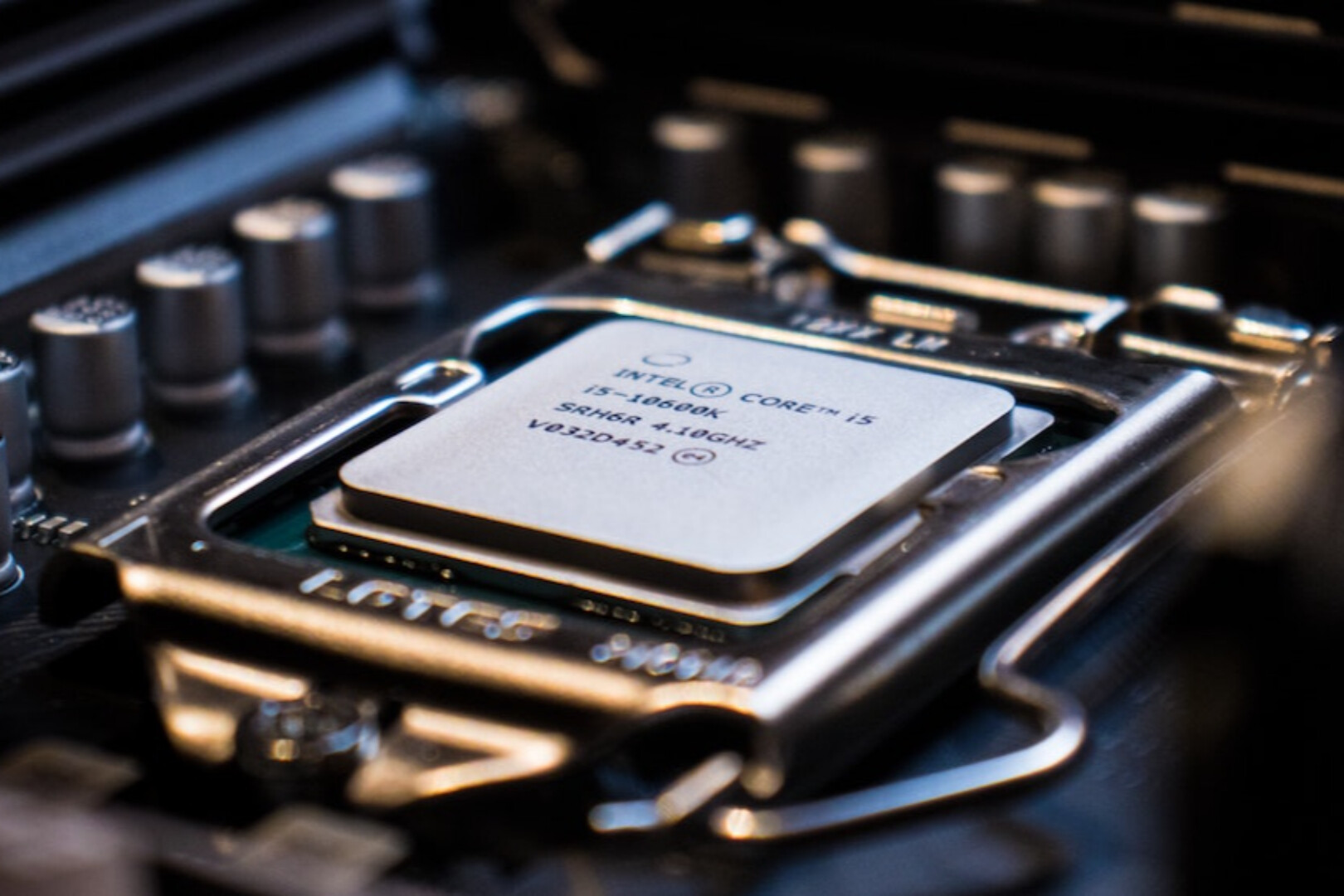
When an AI smart body is awakened, it does not wait for an answer: it retrieves information, plans steps, calls tools, delineates intermediate results, calls again, executes action. This whole set of processes requires the CPU calculus, far beyond the ChatGPT pops up a conversation。
On June 17, the team led by Bernstein analyst David Dai released a report entitled " Global Semiconductor: CPU Renaissance? " , the core judgement of which is that AI is entering the age of intelligent AI from chat robots, and that the role of CPU in the data centre has changed from a GPU combination to a leading actor, pushing the server CPU to reach $223 billion in 2030, six times the $237 billion in 2025。
THE REASONING IS NO LONGER "A QUESTION AND ANSWER" AND CPU IS TURNING OVER THE DISC
GPU/AI accelerators have been at the heart of AI calculations since the emergence of the Big Language Model. The GPU-CPU ratio once reached 8:1 in custom reasoning clusters such as Google TPU v6e and Meta Grand Teton。
But Bernstein believes that this proportion is being reversed with the mainstream AI。
The core feature of Agentic AI is "recycling of reasoning": a request may trigger search, planning, tool call, intermediate reasoning, remodel call, execution of action, and the GPU is responsible for intensive mathematical calculations, but the CPU determines whether the entire system can efficiently organize workflows, schedule tasks, manage memory and avoid accelerators. If the CPU is too weak and expensive, the GPU will be forced to empty, and the overall efficiency of the system will be significantly reduced。
Bernstein predicts that by 2029, the GPU: CPU ratio in the CSP reasoning cluster will fall back from 8:1 in 2025 to 1:1. In an agentic AI workload, CPU calculations will jump from 14% to 50% of the traditional LLM, split equally with GPU。
In particular, the report notes that the hardware road map already confirms this direction. AMD New Generation Vénice calculates that each CPU with 4 MI455X GPU and the Vera Superchip with 2 Rubin GPU, Google TPU v7x extension units with 4 TPUs. The CPU ' s physical ratio has been up, not predicting, but the fact that it is happening。
How did you figure out a $22.3 billion market
BERNSTEIN HAS SIGNIFICANTLY INCREASED THE 2030 SERVER CPU TAM PROJECTION FROM THE PREVIOUS $137 BILLION TO $223 BILLION, BASED ON THE FOLLOWING CORE ASSUMPTIONS:
- 2030 AI CAPITAL EXPENDITURE AMOUNTED TO $3.5 TRILLION, CORRESPONDING TO 70 GW AI DATA CENTRE DEPLOYMENT
- AI ACCELERATOR MARKET SIZE 1.6 TRILLION USD, 45% OF AI DC CAPITAL EXPENDITURE
- THE PROPORTION OF REASONING ROSE FROM 35% TO 70%, CPU: GPU RATIO OF 1:1, TRAINING SCENARIO 0.5:1
- CPU UNIT PRICE EQUALS 13% OF GPU
Under this framework, $223 billion of TAM includes $174 billion from anticipatory AI workload and $49 billion from non-AI traditional server CPU. Compared to current levels, in 2025 the entire server CPU market was only $37 billion, of which AI related only $6 billion. This means that over the next five years, the CPU market will undergo a six-fold round of expansion at a combined annual rate of 43 per cent, almost unprecedented in the history of the semiconductor sector. Bernstein also gave the range between the bull market ($330 billion, assuming $4 trillion AI capital expenditure + 1.5:1 reasoning ratio) and Bear City ($137 billion), assuming $3 trillion capital expenditure + 0.5: reasoning ratio)。
An interesting cross-certification comes from the core number of CPUs on the server: Arm data shows that angentic AI needs 120 million CPU cores per GW, four times as many as the traditional data centres. On this basis, 70 GW AI deployments in 2030 require 8.4 billion CPU cores, corresponding to $168 billion AI CPU TAM, which are highly consistent with the previous model。
Why is Arm the biggest winner? It's not just an IP. It's making chips
Arm was listed by Bernstein as a structural beneficiary of the CPU renaissance. The Arm architecture is becoming increasingly attractive in AI data centres with energy efficiency ratios. AWS Graviton is 40% more expensive than x86 and 60% less efficient。
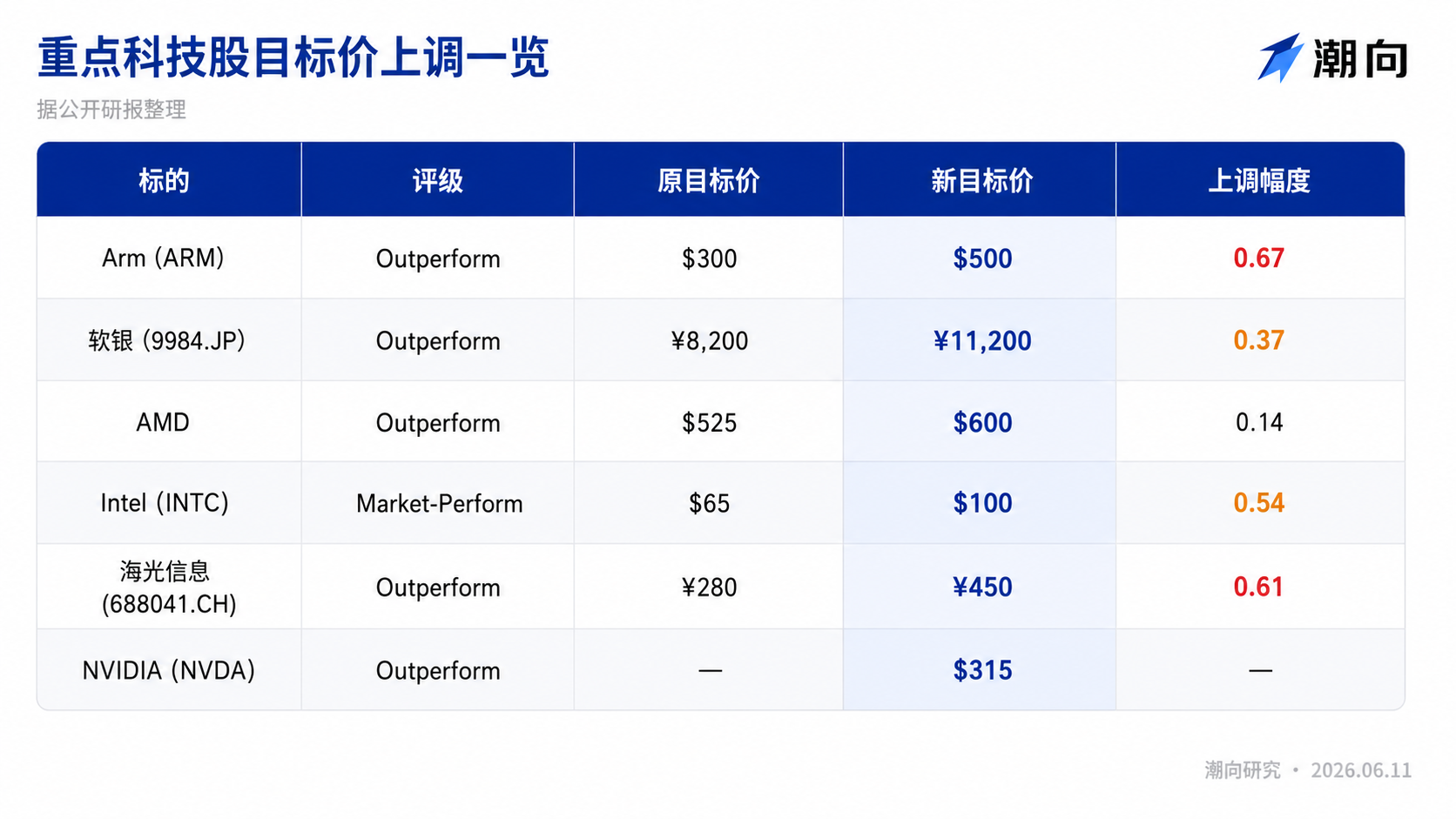
More critically, in March 2026, Arm announced a strategic transformation: from providing only an IP mandate to self-manufacturing CPU, the goal is to achieve $15 billion in chip revenues by 2030. Arm AGI CPU has locked Meta as its first client and co-developer, OpenAI, Cerebras and Cloudflare. By doing so, Bernstein increased the EPS for fiscal year 2030 to $11.79 (formerly $9.83) and considered that its chip revenue projections could amount to $22 billion, exceeding Arm ' s own target. Based on 42 times PE gives a target price of $500 (previously $300)。
It also boosts the target price of soft silver (SoftBank, holding approximately 90 per cent of the shares in Arm) from JPY 8,200 to JPY 11,200, implying an increase of 58 per cent in space. Bernstein ' s valuation of soft silver is based on a 30 per cent discount on its holdings of NAV, which is narrower than before and reflects the rise in the value of Arm ' s equity and the improvement of soft silver ' s own operations。
AMD, Intel, Hairay: Who is benefiting
AMD (over-match, target $600): The product is still ahead of the x86 camp and is expected to continue to capture market shares. The CPU, whose current model is implicit, assumes an upward adjustment to the target price of $600 after rolling the valuation to the CY27/28 average。
Intel (market flat, target $100): The profit forecast has increased significantly, benefiting from stronger and more sustained server CPU demand. Bernstein moved the Intel model from conservative assumptions to industry, with the target price rising from $65 to $100。
Sealight information Hygon: Bernstein believes that China’s x86 CPU demand will exceed the global rate of growth and that the share of China’s CPU market in China’s servers will continue to expand from the current level to over 35 per cent in 2030, with not only government and State clients, but also penetrating to the CSP. The target price has been significantly increased from $280 to $450。
Source: Bernstein
Tide Interpretation
The weakest link in Bernstein's discourse may not be on the demand side, but on the supply side。
THE REPORT ACKNOWLEDGES IN A FOOTNOTE THAT “THE ASSESSMENT OF WHETHER SURROGATE PLANTS AND MEMORY CAPACITY ARE SUFFICIENT TO SUPPORT CPU GROWTH” IS THE GREATEST UNCERTAINTY THROUGHOUT THE REPORT. BRINGING CPU TAM FROM 37 BILLION TO 223 BILLION MEANS THAT AN ADDITIONAL CPU CAPACITY OF ABOUT $30 BILLION PER YEAR WILL BE REQUIRED BY 2030。
The 3 nm/5nm capacity for power generation is being squeezed by AI accelerators and mobile phone chips, whether the surrogate capacity assigned to the server CPU is sufficiently flexible, and the report does not give a precise yield map. Moreover, the core assumptions of the report, which are based on the "AI annual infrastructure expenditure in 2027 above $1 trillion" guided by In Weida, are in itself the most optimistic predictions of the sellers and, as another starting point for the development of the needs, there is the risk of expected overlap。
Another sign of concern is that the use of the self-study Arm structure by Ingweida Vera CPU means that Weidar may be the partner and competitor of Arm in the CPU domain at the same time, which has a subtle effect on whether or not Arm ' s long-term share will reach 54%。
The most valuable point of this report for investors is not just a target price, but provides a clear framework for judgement:If you believe that agentic AI is the real next stage, CPU configuration must be repricing from "sufficient enough" to mean that the focus of the entire semiconductor investment profile needs to move from a GPU to a more balanced CPU+GPU narrative。
Risk tip
This post is part of our special coverage Global Voices 2011. The ratings, target prices, profit projections and related judgements cited in the paper represent the views of the voucher analyst and represent only the institutional position of the organization to which it belongs, do not represent a trend-oriented view of research or constitute any investment proposal。
