
Read a book about the two routes paid by x 402 and MP:Agent
x 402 to pay in agreement, MPP to pay at system level

Original title: Stripe's MPP vs. x402: What Actually happened Today
This post is part of our special coverage Syria Protests 2011
Photo by Peggy Blockbeats
The editor presses: how to pay around Agent, x 402 and MPP give two almost opposite paths。
x402 goes to minimize the protocol: to embed payments directly into HTTP requests, and to pay them in the simplest way. There are no accounts, no intermediaries, more like the early, open, unlicensed designs of the Internet, suitable for longtail developers and down-to-centre scenarios。
MPP is the system to maximize: high-frequency transactions, wind controls and access to currency are addressed through sessions, fluid payment and compliance systems. Rather than pursuing purity, it prioritizes real business needs and is better suited to enterprise-level and scale applications。
The difference between the two is essentially two solutions to the same issue: whether the payment is part of the agreement or one layer of the system。
As a result, they are not fully competitive, but are more like distributed between regions, x 402 covering the long-end demand for open networks, and MPP carrying high frequency and commercial traffic. This division may be necessary in an economy that has not yet developed。
The following is the original text:
HTTP status code 402 has been waiting for a place to use force since the late 1990s when it was defined in HTTP/1.1. It means payment. It was originally envisaged that capacity to pay would be embedded in the protocol layer of Web to enable the machine to purchase resources as it requested the web page。
But most of this scenario has not materialized. For many years, this status code has only occasionally appeared in marginal scenarios, such as the limited flow response of Shopify, the miscalculation of Apple Mobile Me, and so on, but no one really built the micro-payment future that it implies. Instead, they are credit cards, subscriptions to pay walls, and API Key mechanisms, which are essentially designed for manual humans。
Today, two competing paths to that future emerge and are published on the same day. And then I'd like to sort out what they are, what they differ, and why Stripe would be betting on both routes。
x402: a simpler option
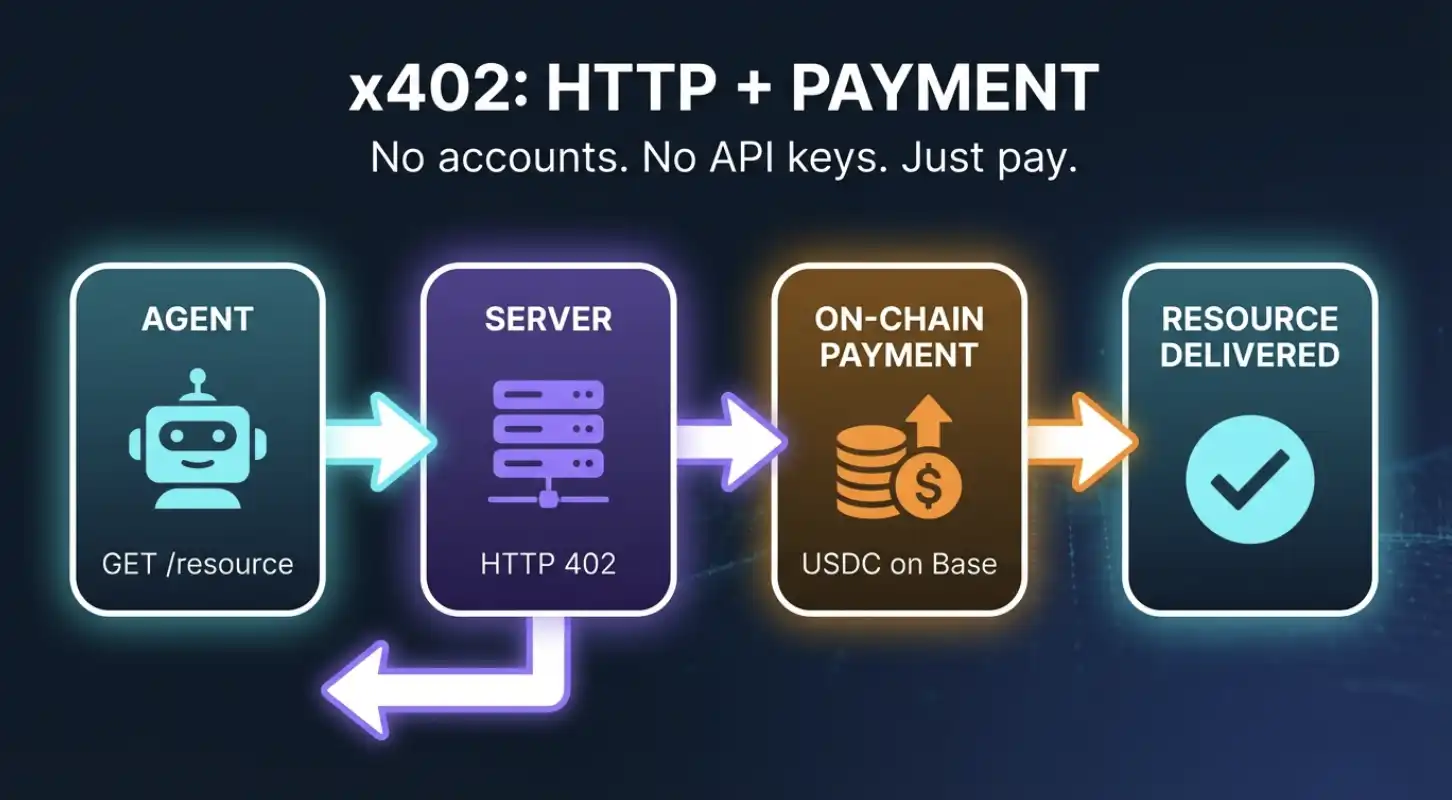
Coinbase officially launched x 402 in May 2025, and its core philosophy is almost as simple as radical. The client requests a resource; the server returns HTTP402 and informs the client about the fees to be paid, the currency to be used, and the chain to be paid. When the client completes the payment on the chain, the payment voucher is attached to the re-launch request and the server delivers the resources。
That's it. No account system, no API Key, no subscription mechanism. Just one HTTP request to return and insert a payment in the middle。
Today, Stripe has provided primary support for x 402 in its payment system and businesses can receive such payments directly through existing backstages. In essence, however, x402 remains the Coinbase-led agreement, which, together with Cloudflare, was launched in September 2025 to govern x402 Foundation. The agreement is fully open-source (Apache 2.0 license) and provides multilingual SDK such as TypeScript, Go and Python。
In terms of the range of support, Coinbase's official documentation shows that ERC-20 payments are currently supported on Base, Polygon and Solana. At the same time, ecology is exploring its extension to other chains such as Avalanche, Sui and Near, but with varying degrees of maturity。
And then look at the data, this part is a little complicated. Coinbase states that x402 has processed more than 50 million transactions through its Institutional Wallet infrastructure. It sounds bright, but according to CoinDesk, who quoted Artemis on March 11th, analyzes the data: the daily volume of transactions is about 131,000, with a total value of about $28,000, and the average single payment is only about $0.20, about half of which is more like a test or game-based act than a real business transaction。
But this is not necessarily bad. Because the protocol was designed for a market that did not exist yet, and a micropayment (or even less than one cent) by AI anent for the world of API calls and data queries. The market for services is just beginning to appear。
For example, the Google Agenic Payments Protocol (AP2, under the A2A framework) has been assembled as x402; Lowe's Innovation Labs also shows a demo: AI anent can complete the entire process of identifying and investigating commodities in a process. Meanwhile, World (sponsored by Sam Altman) released AgentKit this week to increase human identity for 402 wallets。
THE CENTRAL ASSUMPTION BEHIND IT IS THAT, AS LONG AS THE PAYMENTS ARE AS LIGHT AS HTTP REQUESTS, THE APPLICATION SCENE WILL COME. THIS IS STILL TO BE VERIFIED。
MPP: INNWIDE PROGRAM
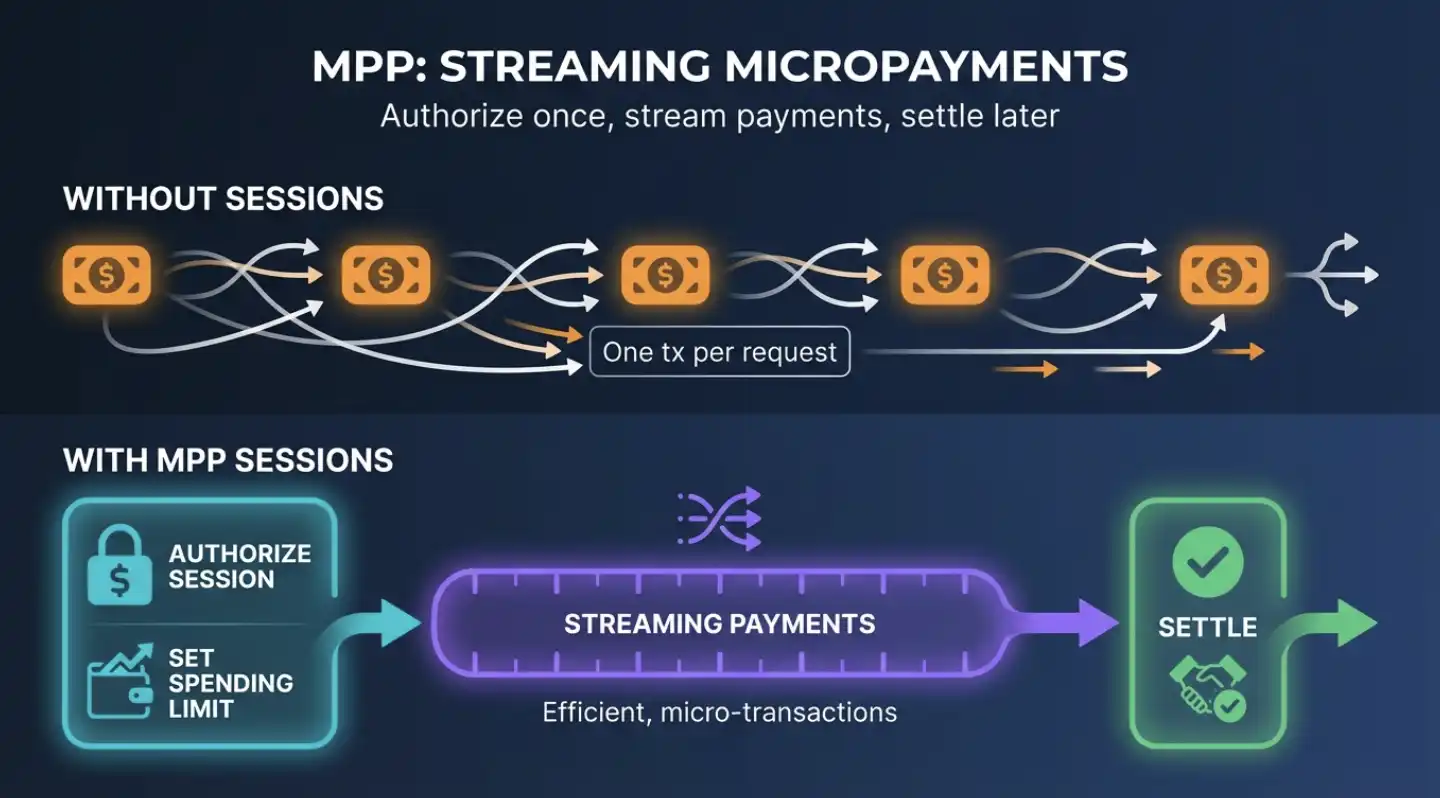
Stripe and Tempo chose a different path. Machine Payments Protocol (MPP) was launched today along with Tempo's main line. Unlike x402 as a light cover layer above the existing block chain, MPP is specifically designed for the scenario of high-frequency traded smarts (agents)。
Its core mechanism is sessions. Unlike each request for resources, where a chain transaction is initiated, angent can first authorize a one-time expenditure level within which the micropayments are made on an ongoing basis. If you're an AI that needs to search thousands of data sources every hour, you don't want to sign and broadcast a chain deal every time, and this is exactly how the session works。
The Tempo chain was built around this need. It supports tens of thousands of transactions per second, has a subsecond confirmation time and has no original gas tokens. Users are able to pay transaction fees directly in stable currency, and some cumbersome steps to purchase random tokens for the transfer are avoided。
Another understandable component is that of Stripe's Agency Company Suite, which contains Shared Payment Tokens. This is not part of the MPP itself, but rather of the extended mechanism of Stripe, but can be used in conjunction with it. SPT allows angent to pass the user ' s bank card or wallet certificate safely to the business without revealing the real data. These documents are limited to single transactions and are time-limited and can be understood as a programmable, self-destructable authorization. In practical use, this means that an individual paid through MPP can use either USDC on Tempo, or a user-bound Visa card, or even a combination of both。
According to Tempo's online blog, its partners include Anthropic, DoorDash, Mastercard, Nubank, OpenAI, Ramp, Revolut, Shopify, Standard Chartered and Visa. The Block reports that over 100 services have been included in the MPP on-line payment catalogue, including Alchemy, Dune Analytics, Merit Systems and Parallel Web Systems. The co-founder of Tempo and Paradigm, Matt Huang, in an interview with Fortune, stated that this area was still at an early stage and that the MPP was designed to reach more chain environments beyond Tempo in the future。
Why
If you have access to Stripe, the most practical answer is, you don't have to choose between them。
Stripe supports x 402 and MPP through two separate integrated paths instead of abstracting them into a unified interface. For x402, the file mainly covers the process of generating a full-value address, chain monitoring and clearing funds to Stripe - you are responsible for returning the 402 response, and the underlying encrypted payment infrastructure is processed by Stripe. Currently supporting USDC on Base and expanding in the future. In the case of MPPs, traders can receive current payments based on sessions through the same PaymentIntents API。
The Age Commission Suite, published by Stripe in December 2025, is built on these two payment tracks. When a merchant simply uploads a catalogue of goods, chooses the AI targets that he wants to access, Stripe will be responsible for the discovery, closing process, anti-fraud and tax processing of the goods. Currently, URLs, Etsy, Coach, Kate Spade and Ashley Furniture are in use, and platforms such as Wix, WooCommerce, BigCommerce, Square and Commercetools have also been integrated。
The strategy is clear: it controls the abstract and allows the bottom bargain to compete freely。
Compare
AT THE MACRO LEVEL, THE TWO PROTOCOLS ARE DOING THE SAME THING: MAKING MACHINES PAY FOR RESOURCES THROUGH HTTP. BUT THE REAL DIFFERENCE IS IN DETAIL。
x402 (led by Coinbase)vs MPP (Stripe + Tempo)
Standardization
x402: Full Open Source (Apache 2.0), with multiple participation facilitated by 402 Foundation (Coinbase, Cloudflare, Visa, Google)。
MPP: Open Standards, developed jointly by Stripe and Tempo, as part of the Stripe Agency Company Suite。
HTTP MECHANISM
x402: Resuscitation HTTP 402, at the PAYMENT-REQUIRED head, to complete the retest using PAYMENT-SIGNATURE。
MPP: The Challenge-response mechanism is also used, but the Payment HTTP Association Scheme (IETF draft) binds the Challenge ID through HMAC。
Pays to the bottom (Rails)
x402: The design is unconnected and is currently supported on Base, Polygon, Solana and other chains are still being explored。
MPP: Based on the Tempo block chain - a L1 that optimizes payments, supports 10,000+TPS, subsecond level confirmations, no original Gas tokens; the long-term goal is to achieve cross-chain compatibility。
Method of payment
x 402: purely stable currency, full chain。
MPP: Supports USDC + SPT (Stripe mechanism) on Tempo, which uses encryption to blend with French currency (bank cards, wallets, BNPL)。
Settlement
x402: A chained settlement (approximately 200 ms to several seconds) is performed by Coinbase et al. facilitator for validation and settlement。
MPP: Tempo Subsecond confirms that Stripe automatically logs in and processes compliance。
Commercial access
x402: Open source intermediate (Express, Hono, Next.js, etc.), self-built or used。
MPP: PaymentIntents API for direct access to Stripe. Wind control, taxes, refunds, full-in。
Core innovation
402: Extremely concise, non-manufacturing, similar to the Unix philosophy in the area of payments。
MPP: High throughput + French currency integration, flow payments through session, micropayment aggregation, and programmable expenditure controls based on SPT。
Key collaborators
x402: Coinbase, Cloudflare, Google (A2A/AP2), Visa, World, Anthropic (MCP)。
MPP: Stripe, Visa, Lightspank, Anthropic, DoorDash, MasterCard, OpenAI, Shopify, Revolut, Strat Chartered Bank。
it's more like your first option to build an open system: independent developer API, decentralised data market, or any service that does not want to rely on a pay processor. Its norms can be written into a white paper, and access requires only an intermediate and a wallet address. This purity is attractive — although purely encrypted restrictions mean that its audience is narrower。
MPP is another completely different paradigm. If your angent needs to make hundreds or thousands of deals in a session, and doesn't want to be chained every time, then it's a more reasonable choice. The session mechanism allows most of the interactions to remain below the chain until final settlement; the Stripe compliance system is responsible for wind control and taxation; and the SPT hybrid model allows angent to be removed from the stable currency and to call directly on payments such as the user ' s Visa. It's less elegant, but closer to reality。
Interestingly, they are not exactly competitive. x 402 to cover long-tail open scenes, MPP to cover high-frequency enterprise-level traffic. Stripe’s strategy is also clear: instead of betting on a single agreement, it is ensuring that whatever path wins, funds eventually flow into Stripe’s account system。
The reality: where is it now
To be honest, there is almost no real scale deal。
According to Coinbase x402, early collaborators included Hyperbolic (GPU reason payment) and Anthropic (MCP integration). Stripe's blog refers to the API call-for-agent scenario (e.g. CoinGecko). The 100+ service is in Tempo 's online directory. The Ages SDK of Cloudflare has original support for x402, and some small projects on Base L2 are also trying to use x402 as a payment gateway。
Overall, however, the volume of transactions is small, the number of businesses is limited and most activities are still at the experimental stage。
It's not really a surprise. This was the case early on in any new payment infrastructure. Lists of so-called partners sometimes vary significantly from signed letters of intent to already online production, and these issuances are usually not specifically differentiated。
More noteworthy is the heavyweight participants behind infrastructure. Stripe processed payments of $1.9 trillion in 2025, an increase of 34 per cent over the same period. At the same time, Coimbase, Cloudflare, Visa, Google and Tempo have all joined a network of cooperation。
In other words, the orbit is ready. There's only one question: in 2026, does AI anent really need to trade on this track? Or is this more like the 1998 fibre optic -- demand hasn't come, but infrastructure goes first。
Which one
if you're building an open, non-licensed system -- x 402 -- it's more natural. no platform for registration, no payment to the payer, import intermediates and bind wallets can be collected. the costs are: compliance, control, and financial settlement are handled by themselves。
If you're already in the Stripe system and want access to angent traffic -- MPP is more appropriate. The session, flow payments, mixed French + encryption, and complete compliance systems are more essentially like configuration upgrades than system re-engineering。
If you only care about one thing: no matter what agreement you're using, I can charge. And the answer is: with Stripe. It supports both sides。
HTTP 402 FINALLY CAME IN HANDY. JUST, IT WAITED ALMOST 27 YEARS。
[ Chuckles ]Original Link]
